


Collection:
Through-hole probes

XSONIC 50/200 HDI depth sounder (0°)
Ref : 000-13905-001
Choose your option

XSONIC Airmar SS60 (12°)
Ref : 000-13785-001
Choose your option

XSONIC Airmar SS60 0° Through-Hull Sonde
Ref : 000-13784-001
Choose your option

XSONIC Airmar SS260
Ref : 000-13783-001
Choose your option

XSONIC Airmar SS175H-W (20°)
Ref : 000-13782-001
Choose your option

XSONIC Airmar SS175M (20°)
Ref : 000-13779-001
Choose your option
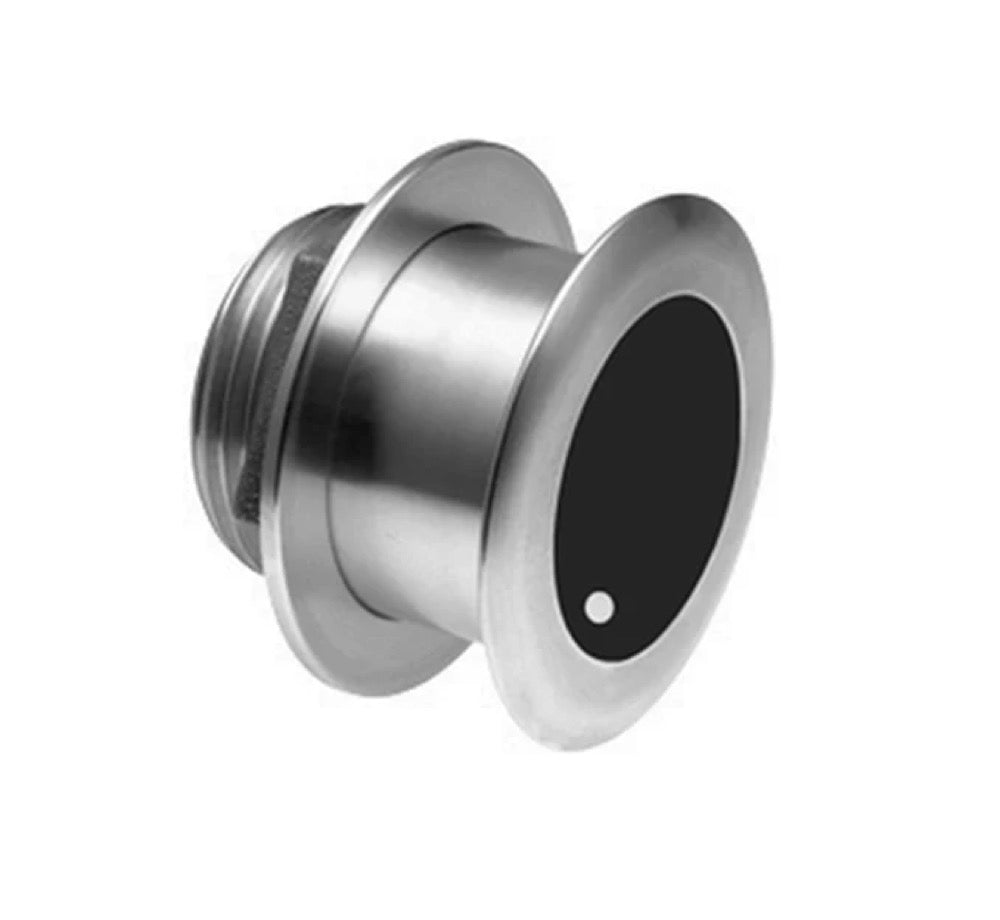
XSONIC Airmar SS175M (12°)
Ref : 000-13778-001
Choose your option

XSONIC Airmar SS175M (0°)
Ref : 000-13777-001
Choose your option

XSONIC Airmar SS175L (20°)
Ref : 000-13776-001
Choose your option

XSONIC Airmar SS175L (12°)
Ref : 000-13775-001
Choose your option

XSONIC Airmar SS175L (0°)
Ref : 000-13774-001
Choose your option

XSONIC Airmar B275LH-W
Ref : 000-13771-001
Choose your option

Through-hull StructureScan dual transducer (stainless steel)
Ref : 000-11460-001
Choose your option


PDRT-WBL 83/200 kHz Pod Fishfinder with Remote Temperature Sensor
Ref : 000-0106-89
Choose your option

Pod PD-WBL 83/200 kHz Depth Sounder
Ref : 000-0106-73
Choose your option
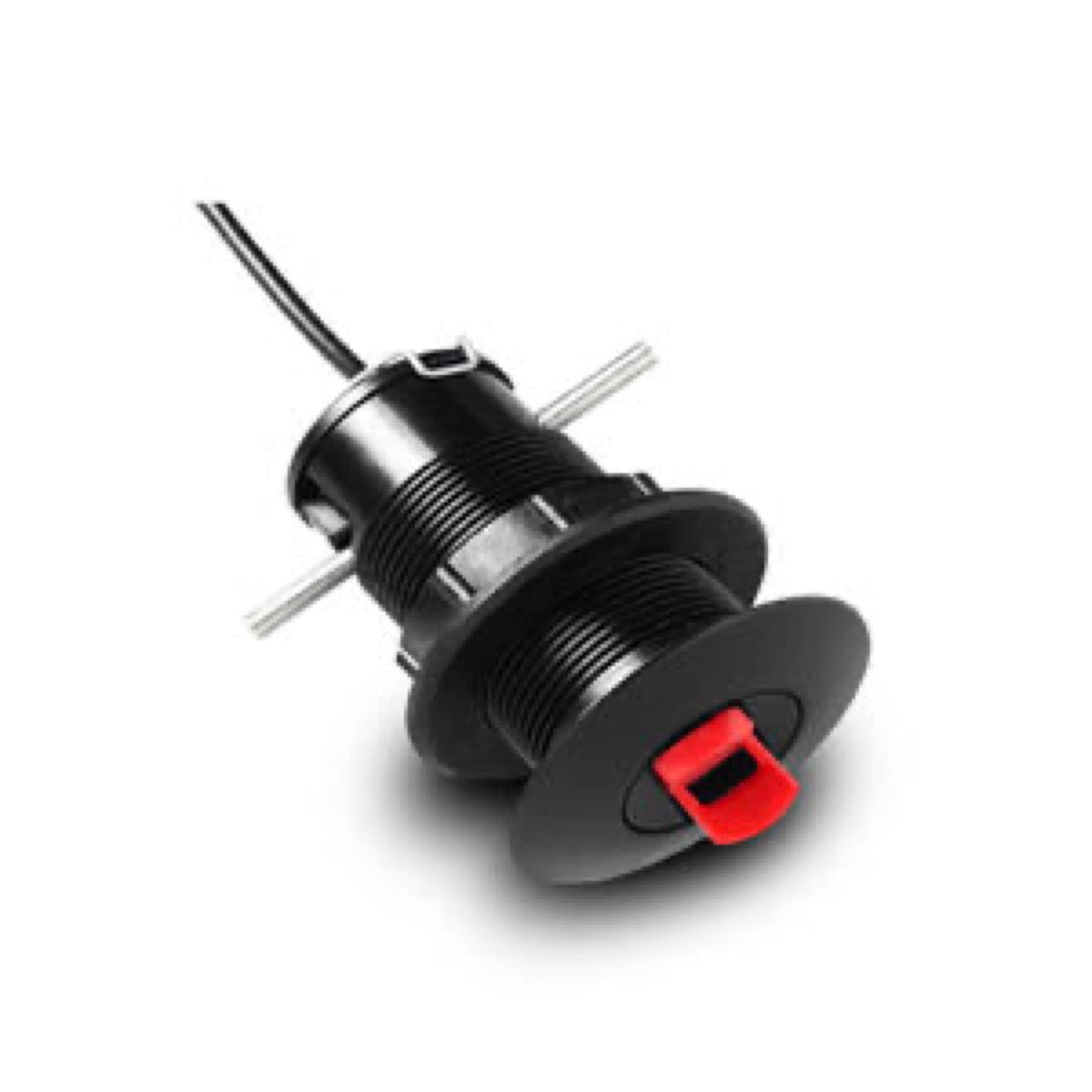
GST™ 43 Through-Hull Speed & Temperature Sensor
Ref : 010-04283-00
Choose your option

GDT™ 43 thru-hull transducer (depth/temperature) and NMEA 2000 adapter
Ref : 010-01749-10
Choose your option

GDT™ 43 Through-Hull Depth/Temperature Sensor
Ref : 010-01749-00
Choose your option

Intelligent through-hull transducer 150 W 13°-24° (NMEA 2000)
Ref : 010-00701-01
Choose your option

Intelligent through-hull transducer 150 W 0°-12° (NMEA 2000)
Ref : 010-00701-00
Choose your option


Retractable depth sounder sensor
Ref : T912
Choose your option


Pack of 2 through-hull Inox 20° port/starboard RVM-420 transducers, direct AXIOM2 and RVM1600 (2 x 2m cables, Y-cable and 8m extension)
Ref : T70544
Choose your option


Raymarine RVM-412 stainless steel through-hull transducer pack 12° port/starboard, direct AXIOM2 and RVM1600 (2 x 2m cable with Y splitter and 8m extension)
Ref : T70543
Choose your option


Pack 2 through-hull 20° port/starboard stainless steel RV-420 transducers, direct connection to Axiom (2 x 2m cables, Y-cable and 8m extension)
Ref : T70451
Choose your option


Pack 2 through-hull transducers stainless steel 12° port / starboard RV-412, direct connection Axiom (2 x 2m, Y-cable and 8m extension)
Ref : T70450
Choose your option


Raymarine HV-300 HyperVision™ T70448 plastic through-hull transducer pack port and starboard 12°
Ref : T70448
Choose your option

XSONIC P319 Sensor
Ref : 000-13915-001
Choose your option


XSONIC SS175H-W 0° Depth Sounder Transducer
Ref : 000-13780-001
Choose your option


Pack through-hull plastic port and starboard 20° RV-320 RealVision 3D sonar, direct connection to Axiom (2 x 2m cables, Y-cable and 8m extension)
Ref : T70321
Choose your option


Bow and starboard through-hull plastic transducer pack 12° RV-312 RealVision 3D, direct connection to AXIOM (2 x 2m cables, Y-cable and 8m extension)
Ref : T70320
Choose your option


Bronze through-hull transducer pack port and starboard 20° RV-220 RealVision 3D, direct connection to AXIOM (2 x 2m cables, Y-cable and 8m extension)
Ref : T70319
Choose your option


Bronze through-hull transducer pack, port and starboard 12° RV-212 RealVision 3D, direct connection to AXIOM (2 x 2m cables, Y-cable and 8m extension)
Ref : T70318
Choose your option


Pack of two B175 D/T Medium-High 20 deg through-hull transducers
Ref : T70077
Choose your option


Pack of two Raymarine B175 D/T Low-Medium 20° through-hull transducers
Ref : T70076
Choose your option


Pack of two B175 D/T Low-High 20° through-hull transducers
Ref : T70075
Choose your option


Micronet Race Master System, Triducer and Solar Panel
Ref : T075-868
Choose your option
Learn more
Through-hole probes: exploring the seabed with precision
The through-hull transducer is a crucial component of your marine electronics, providing a detailed view of the seabed for navigation, fishing, and safety. At Skysat, we rigorously select the highest-performing through-hull transducers, prioritizing reliability and data accuracy. Discover a complete range tailored to your specific needs, the result of our experience in offshore racing and our expertise in system integration.
choose the right probe technology
The choice of transducer technology is crucial to the quality of the information you receive. From traditional models to scanning transducers and CHIRP versions, each technology offers specific advantages. Understanding these differences is essential to optimizing your experience at sea.
- Traditional probes: Reliable and proven, ideal for general use and good coverage.
- CHIRP probes: Offer superior image resolution and better target separation, particularly effective for fishing.
- Scanning probes (SideScan/DownScan): Allow detailed visualization of the seabed and submerged structures, useful for shipwreck searches or obstacle avoidance.
- Multifunctional probes: Combine several technologies for maximum versatility.
installation and compatibility of through-hole probes
Proper installation and compatibility with your electronic system are essential to ensure the correct operation of your thru-hull transducer. Improper installation can impact performance and compromise data reliability. Consider the shape of your hull, the ideal location, and the communication protocols compatible with your multifunction display.
- Deadrise angle: The angle of the hull influences the choice of probe and sometimes requires the use of adapter shims.
- NMEA 2000/SeaTalk NG connectivity: Ensure compatibility with your onboard network for seamless data integration.
- Materials: Choose a material compatible with your case (bronze, plastic, stainless steel) to avoid electrolytic corrosion.
- Immersion depth: A probe that is too deep can generate turbulence and affect data quality.
factors influencing performance
Several factors can influence the performance of a through-hull transducer, including water quality, boat speed, and electrical noise. Understanding these factors will allow you to optimize your transducer settings and obtain accurate and reliable readings.
- Turbulence and cavitation: Reducing speed in turbulent areas can improve image quality.
- Gain and frequency settings: Adjust the parameters according to environmental conditions to optimize target detection.
- Electrical interference: Check wiring and insulation to minimize electrical noise that can affect performance.
- Water salinity and temperature: These factors can influence the propagation of sound waves and require adjustments to the probe parameters.
💡 Skysat's advice
Before installing your through-hole probe, perform a dry run to check for interference with other equipment and to optimize its placement. Feel free to contact us for personalized installation support.


