

Probes (Transducers)
Your exact display model determines compatibility. Then compare the documented mounting method, technology and connector for each transducer.

Fishing equipment
338 results
Online catalogue results. Obsolete listings and parent listings grouping variants are not displayed in the grid.
Some criteria in this link are unavailable. The results shown match only the active filters below.
Remove unavailable criteria

Eagle TripleShot Transducer
Ref : 000-16285-001
Choose your option


SplitShot Skimmer Fishfinder
Ref : 000-14028-001
Choose your option


ActiveImaging™ 3-in-1 Active Sonar with 7.6 m (25 ft) cable
Ref : 000-14489-001
Choose your option

GO9 XSE - with Active Imaging 3-in-1 Transducer
Ref : 000-14841-001
Choose your option

XSONIC Airmar B175M (12°)
Ref : 000-16203-001
Choose your option

XSONIC Airmar B175H-W (20°)
Ref : 000-16200-001
Choose your option

TripleShot transom mount
Ref : 000-14193-001
Choose your option

XSONIC Airmar TM150M
Ref : 000-13944-001
Choose your option

XSONIC Airmar P79
Ref : 000-13942-001
Choose your option


NAVICO Bullet Skimmer Fishfinder
Ref : 000-14027-001
Choose your option


Analog speedo ST900/P120 V/T - 13.7m cable
Ref : E70673
Choose your option

EAGLE LIVE fishfinder transducer pack
Ref : 000-16368-001
Choose your option

Airmar B175M 12° Mix & Match - 1 kW CHIRP bronze thru-hull transducer
Ref : 41-565-2-01
Choose your option
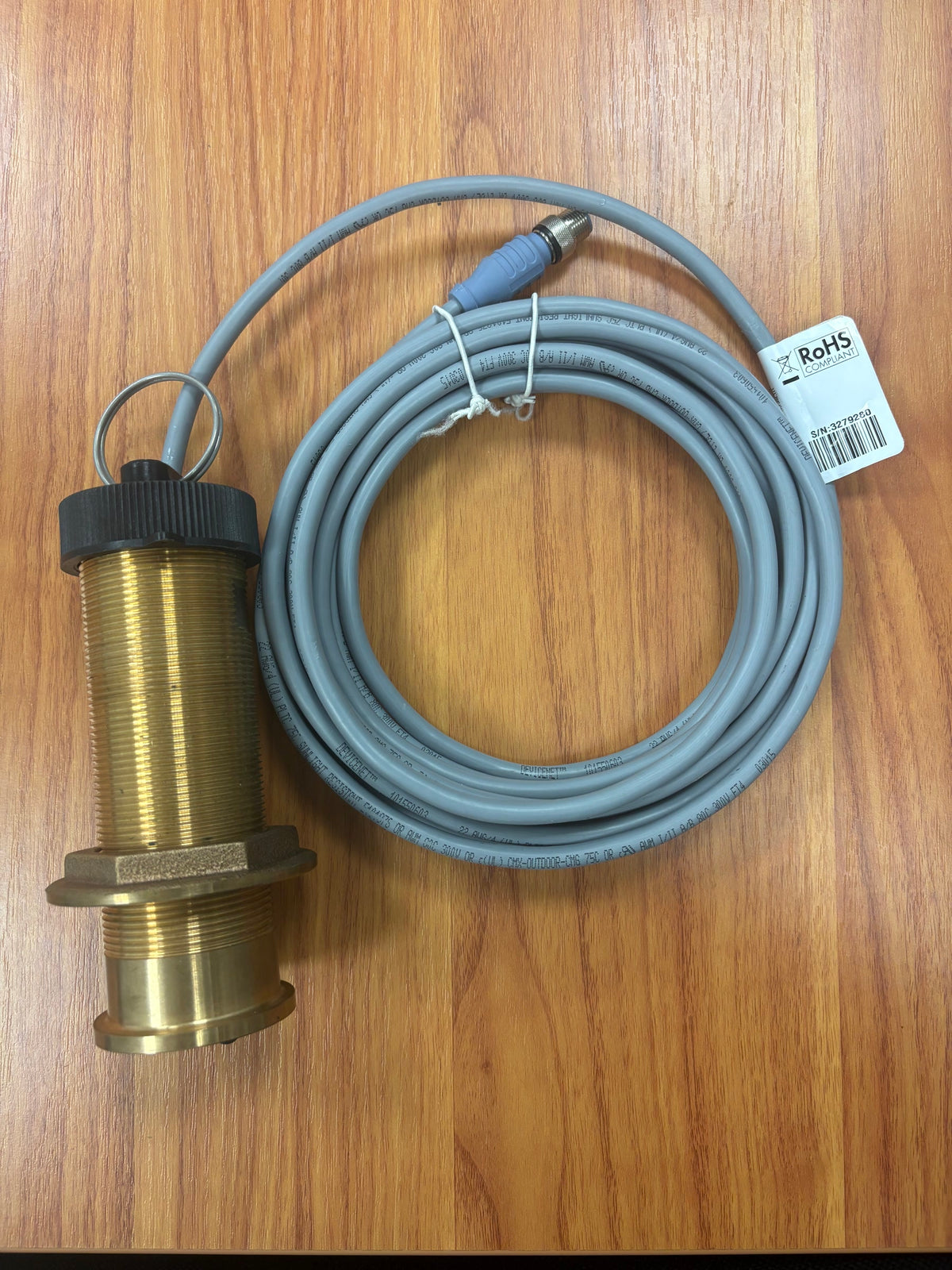
Airmar DST800L 235 kHz NMEA 2000 Thru-Hull Transducer - Clearance
Ref : DST800L-235-N2-DSTK
Choose your option

Sonar adapter for double 9-pin wiring block
Ref : 000-13262-001
Choose your option

H3000 speed sensor with bronze flange
Ref : SEN-SPD-HM
Choose your option

NMEA depth sounder with plastic flange
Ref : SEN-DPT-A2P
Choose your option

NMEA depth transducer with bronze flange
Ref : SEN-DPT-A2M
Choose your option

H3000 depth sounder only
Ref : SEN-DEPTH-H
Choose your option

NMEA-only depth sounder
Ref : SEN-DEPTH-A2
Choose your option

XSONIC Airmar TM265LH Sonde
Ref : 000-16371-001
Choose your option

XSONIC Airmar B265LH Depth Sounder
Ref : 000-16370-001
Choose your option

Airmar 110WX WeatherStation
Ref : 000-16154-001
Choose your option

XSONIC Airmar P19 20 Degree Sonde
Ref : 000-15880-001
Choose your option

Navico B744VC active replacement insert
Ref : 000-15470-001
Choose your option

Long fairing block for ForwardScan transducer
Ref : 000-13579-001
Choose your option

Long stem housing only for ForwardScan
Ref : 000-13578-001
Choose your option

ForwardScan long-stem depth sounder kit
Ref : 000-13284-001
Choose your option


ForwardScan depth sounder only
Ref : 000-11675-001
Choose your option

Bronze housing kit for DST100/DST110
Ref : M33-100
Choose your option


R199 1000W Inside Sondeur
Ref : E66076
Choose your option

P314 Through-hull fitting and valve
Ref : 33-092-01
Choose your option


Adapter kit for mounting HV-100 on trolling motor
Ref : A80557
Choose your option


P19 LP TH plastic probe, 14M depth rating
Ref : M78713-PZ
Choose your option

V/T ST950/P17 depth sounder cable 10.0m
Ref : E70687
Choose your option

High Chirp CPT-S conical beam through-hole plastic probe, 10m cable
Ref : E70339
Choose your option


Plastic through-hull retractable depth sounder cable 13.8m
Ref : E26030
Choose your option

P66DST — 600W Depth Sounder for Transom Mount, Plastic, 50/200kHz, 3 Functions
Ref : AI-31-472-1-03
Choose your option

B744VL — 600W Through-Hull Bronze Sonde 50/200kHz 3 Functions
Ref : AI-31-664-2-03
Choose your option


B60-20 — 600W Through-hull bronze depth sounder 50/200 kHz tilt 20° (B60).
Ref : AI-31-556-5-02
Choose your option


P319DT - 600 W 50/200 kHz Plastic Thru-Hull Transducer
Ref : AI-31-323-9-02
Choose your option


TM185MW - 1 kW Mega Wide CHIRP Transom-Mount Transducer
Ref : AI-TM185MW-07-01
Choose your option


FI70PK1 — FURUNO FI70 Multifunction Instrument Pack Speed/Depth/Wind
Ref : IMD03413001PK1
Choose your option


TM903 - 445-465 kHz Side Scan CHIRP Transom-Mount Transducer
Ref : AI-455T-TM903
Choose your option


PR904 - Pair of 220-240 kHz Side Scan CHIRP Transducers
Ref : AI-225T-PR904
Choose your option

SS904 — Side Scan CHIRP Through-Hull Sonde for NavNet TZtouch3 and NavNet TZtouchXL, 220-240 kHz
Ref : AI-225T-SS904
Choose your option

OD-START-KIT — NMEA2000 starter kit including:
Ref : OD-STARTER-KIT
Choose your option


NMEA2000 MICRO5C MFFFFF Certified Adapter
Ref : OD-NAW-MM1MF1MF4001
Choose your option


ST-02MSB — Through-hull speed and temperature sensor in Airmar B17 bronze housing.
Ref : 00116415010
Choose your option
Equipment selection guides
Plan your setup with our Carnac workshop
Tell us how you fish, about your boat and the equipment already installed. A technician checks what you need and the compatibility before advising you.
Probes (transducers): underwater vision at the service of your navigation
The transducer, or sonar, is the underwater eye of your boat. It converts electrical signals into sound waves and vice versa, allowing you to map the seabed, detect fish, and ensure safe navigation. At Skysat, drawing on our experience in offshore racing, we help you choose the transducer best suited to your needs. Discover our carefully curated selection and our tips for optimal system integration here.
choose the right probe technology
Choosing the right sonar technology is crucial and depends on your specific needs: depth, bottom type, boat speed, and target species. Different technologies exist, each with its own advantages and limitations. Understanding these differences is essential for optimizing your fishing or boating performance.
- Traditional (2D) transducers: A proven solution for detecting depth and bottom structure. Their conical beam offers wide coverage but limited resolution. Ideal for shallow water navigation.
- DownVision™ probes: Use CHIRP technology for more detailed bottom imaging, making it easier to identify structures and objects. They are less effective at depth than traditional probes.
- SideVision™ transducers: Offer a lateral view of the bottom, significantly increasing coverage area. Useful for locating specific fishing spots, but require precise installation.
- CHIRP probes: Emit a frequency-modulated signal, which improves resolution and target separation. They offer superior performance in all conditions, but are more expensive.
the importance of frequency and power
The frequency and power of the transducer influence its range and resolution. Lower frequencies penetrate deeper, while higher frequencies offer better resolution. Choosing a transducer suited to your navigation area is therefore essential. Power, meanwhile, determines the transducer's ability to detect targets in challenging conditions.
- Low frequency (50 kHz): Great depth, but low resolution. Suitable for deep-sea navigation and searching for large fish.
- High frequency (200 kHz): Shallow depth, but high resolution. Ideal for coastal fishing and structure identification.
- Low-frequency CHIRP: Excellent penetration and good resolution. An ideal compromise for demanding anglers.
- Power (Watts): The higher the power, the better the transducer can detect weak targets or targets in turbid water. Inadequate power can lead to noise and excessive power consumption.
compatibility and installation
Proper installation and compatibility of your transducer with your multifunction display are crucial for optimal performance. Check the communication protocols (NMEA 2000, SeaTalk NG) and ensure your transducer is correctly configured. Incorrect installation can lead to reading errors and signal loss.
- NMEA 2000 compatibility: Allows easy integration with other onboard electronic devices.
- Connectors: Ensure the probe connector is compatible with your multifunction display. Adapters may be required.
- Probe placement: An incorrect location can cause interference or inaccurate data readings. Consult the installation manual for specific recommendations.
- Software update: Ensure your multifunction display and probe are up to date with the latest software versions to benefit from the best performance.
💡 Skysat's advice
Before drilling through your hull to install a through-hull transducer, test the transducer through the hull with a bag of water. This will allow you to verify its proper functioning and optimize its placement safely.


