


Collection:
Individual MOB/PLB beacons


SM3 — SOLAS/MED-approved LED man-overboard (MOB) light with 3 candelas projection over 360°
Ref : ACR-3947
Choose your option

Single-use Lithium/Iron Disulfide GMDSS battery - Mandatory replacement every 5 years
Ref : OS-721S-00612
Choose your option


RapidDitch Express Bag — ACR Survival Bag, Waterproof and Buoyant
Ref : ACR-2279
Choose your option

Rechargeable Lithium Polymer battery for V100
Ref : OS-721S-00615
Choose your option


M200 — PROFESSIONAL AIS MOB BEACON Class M and 121.5 MHz - NON ATEX
Ref : OS-745S-05489
Choose your option


MOB1 AIS distress beacon rescueME 7-year battery life >24h autonomy
Ref : OS-740S-01551
Choose your option


PLB3 AIS RLS NFS distress beacon
Ref : OS-732S-03668
Choose your option

Ocean Signal PLB3 safety kit (PLB3 + EPIRB3 + grab bag)
Ref : OS-799S-06625
Choose your option
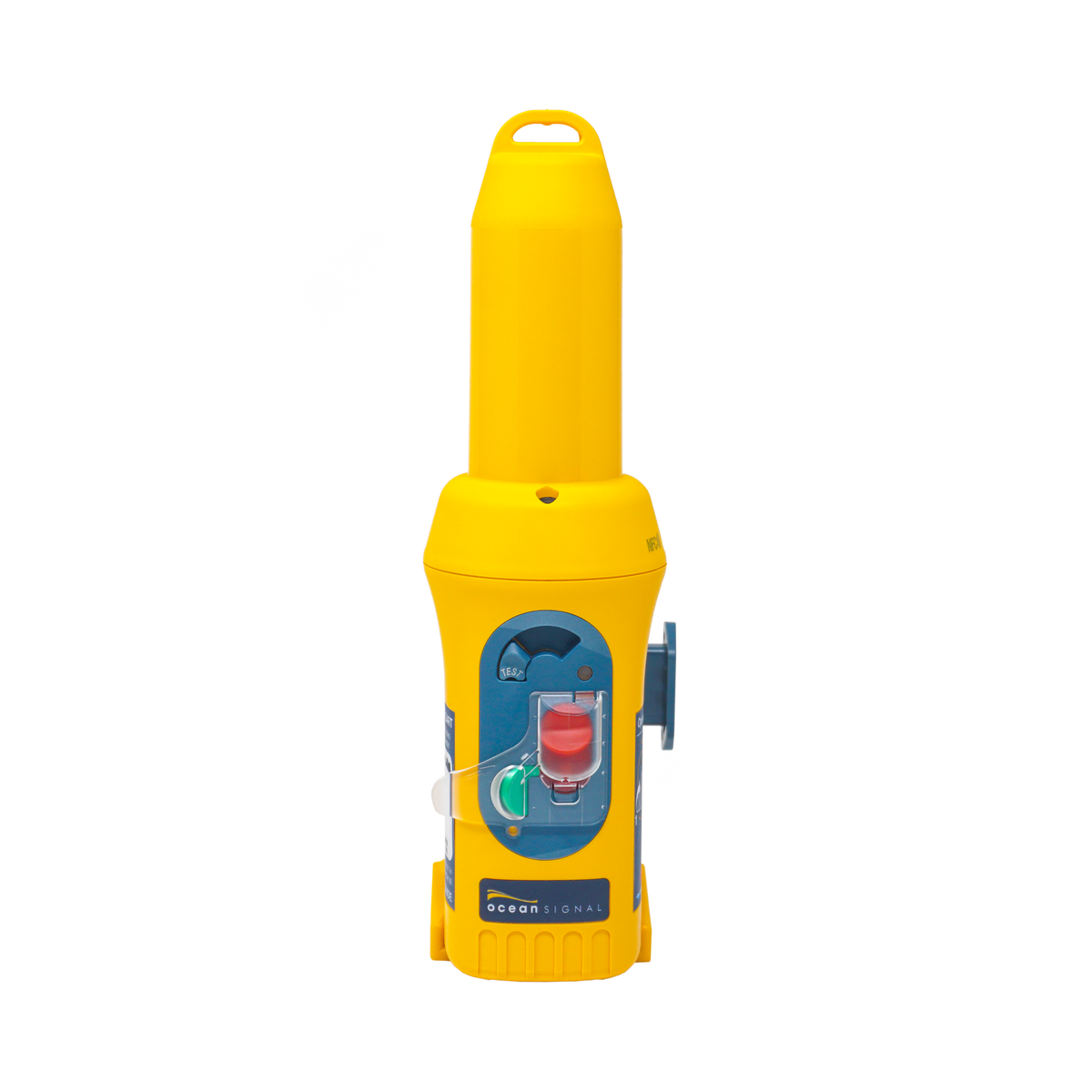

safeSEA S200 AIS SART
Ref : OS-710S-05162
Choose your option


Safe Sea S100 beacon
Ref : OS-710S-00607
Choose your option
Learn more
MOB, PLB, and SART beacons: do not confuse their uses
An individual beacon locates a person or crew in distress, but not all technologies alert the same responders. An AIS/ASN MOB beacon is designed for rapid recovery by the boat and nearby vessels. A 406 MHz PLB alerts the satellite-based rescue chain. An SART aids search around a liferaft, vessel, or distress zone.
AIS/ASN MOB beacons: local recovery of man overboard
An MOB beacon is usually worn on a lifejacket. When activated, it transmits a position to be seen by nearby AIS-compatible receivers; some models can also trigger an ASN/DSC alert depending on the vessel’s radio configuration. The goal is to shorten recovery time by your own boat or nearby units.
The Ocean Signal rescueME MOB1 exemplifies this use: compact format, integrated into the lifejacket, AIS transmission, and local alert. It is particularly relevant for watch crews, night sailing, offshore cruising, or boats where everyone must be locatable from the helm.
406 MHz PLB: alerting rescue services when local recovery is insufficient
A PLB is a personal distress beacon. It transmits on 406 MHz via the Cospas-Sarsat system, with a GNSS position if the model includes it. It does not replace a VHF, AIS, or boat beacon, but provides an individual safety layer useful if the person is separated from the vessel or the alert must extend beyond the local area.
The Ocean Signal PLB3 combines 406 MHz satellite alert with modern functions such as AIS, RLS, and NFC depending on the manufacturer’s intended use. The PLB3 + EPIRB3 safety kit follows a global equipment logic: a personal beacon for the crew member, an EPIRB for the boat, and a ready-to-embark bag.
Radar or AIS SART: aiding rescue teams to find you
SARTs are not strictly individual beacons, but they complete the search and rescue chain. A radar SART responds to search radars on the appropriate band; an AIS SART broadcasts an identifiable target on AIS-compatible equipment. They are mainly useful for locating a liferaft, a distressed vessel, or a gathering zone.
In this category, the safeSEA S100 Radar SART targets radar detection scenarios, while the safeSEA S200 AIS SART prioritizes AIS visibility around the search area.
Key points to check before choosing
Before ordering, verify the primary scenario: crew overboard to be recovered by the boat, long-distance personal alert, liferaft equipment, or additional onboard safety. Also check integration with the lifejacket, compatibility with the boat’s AIS/VHF ASN, battery life, activation method, waterproofing, and any registration or programming requirements applicable to the beacon.
To complete your safety equipment, see the Safety & Beacons collection and products from the Ocean Signal brand.


