


Collection:
Sensors


![[CYCLOPS] 2x smart𝗹𝗶𝗻𝗸² Atto — vue 1](http://skysat.fr/cdn/shop/files/cyclops-official-01-f853fb8ba15f.png?v=1784728761&width=1080)
![[CYCLOPS] 2x smart𝗹𝗶𝗻𝗸² Atto — vue 2](http://skysat.fr/cdn/shop/files/cyclops-official-02-cf1ab4343c32.jpg?v=1784728763&width=1200)


Raymarine RAA100-01 Resistive Rudder Angle Sensor to NMEA2000 Converter
Ref : RAA100-01
Choose your option


Micro Compass with mast bracket (T005 included)
Ref : T061
Choose your option

Capteur de vitesse à roue à aubes de rechange (1996 >)
Ref : SEN-SPRS-SPD
Choose your option

VMHU 1800 mm
Ref : BGH031010
Choose your option


VMHU 1450 mm
Ref : BGH031003
Choose your option

Temperature sensor 15 m (49.2 ft)
Ref : 41500800
Choose your option

Simrad PRO RF14XU rudder angle sensor - frequency and voltage
Ref : 22506950
Choose your option

Capteur d’angle de barre RF25 - SimNet
Ref : 22014286
Choose your option

Capteur d’angle de barre RF45X - fréquence et courant
Ref : 22011415
Choose your option
![[GARMIN] Compas SteadyCast - Garmin image 1](http://skysat.fr/cdn/shop/files/01_e56b8273-4c10-4fce-a2ef-e7f1f2ed7fb4.jpg?v=1781648407&width=1200)
SteadyCast Compass
Ref : 010-11417-10
Choose your option
Speed sensor valve (screw-on version)
Ref : SEN-INSRT-SP2
Choose your option


B&G SAIL PERFORMANCE SENSOR pack – sensor pack for sailing performance
Ref : 000-15974-001
Choose your option

Capteur de vent vertical WS730S version Océan - 1450 mm
Ref : 000-14984-001
Choose your option
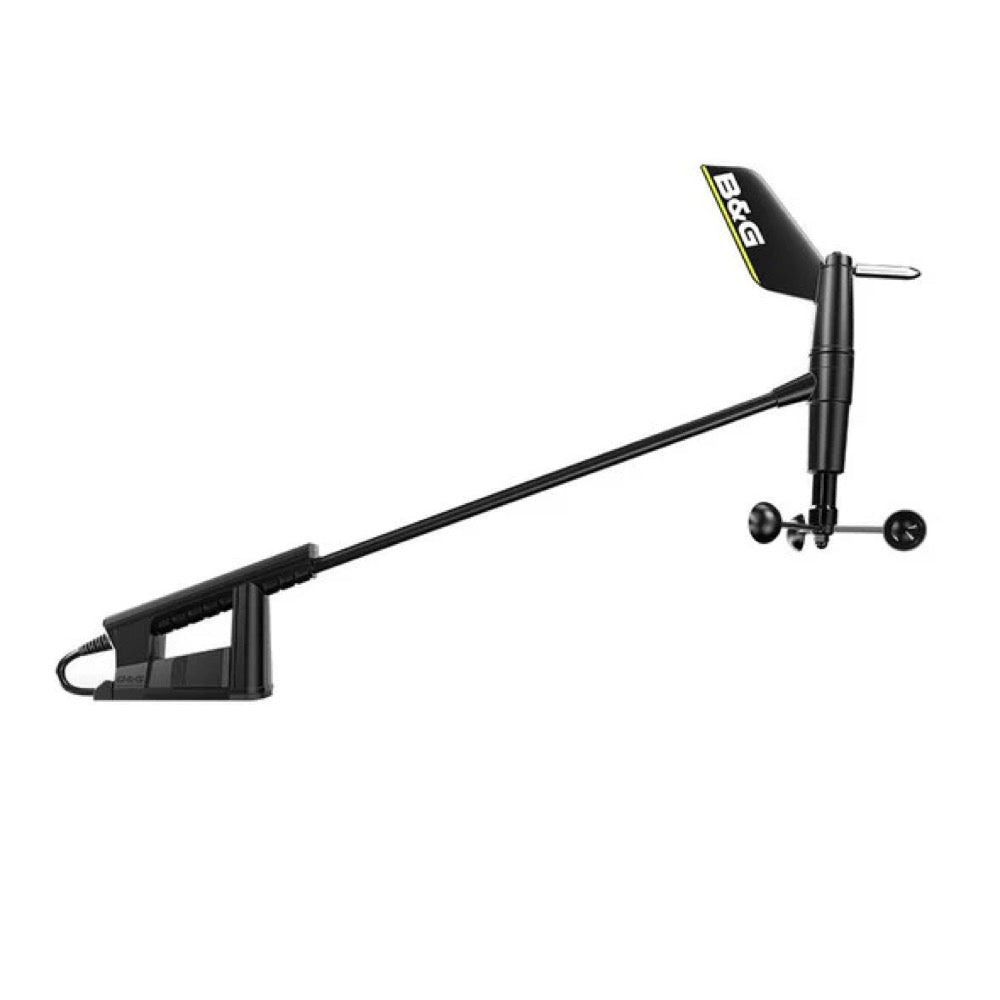

B&G WS310 wired wind sensor pack with 35 m mast cable and interface
Ref : 000-14843-001
Choose your option

Câble de mât WS310/700 80 m (262')
Ref : 000-14399-001
Choose your option

Capteur de vent vertical Spécification Océan WS740S - 1800 mm
Ref : 000-14395-001
Choose your option

B&G WS730 Wind Sensor Pack
Ref : 000-14386-001
Choose your option

B&G WS720 Wind Sensor Pack
Ref : 000-14385-001
Choose your option


B&G 608 Wind Sensor
Ref : 000-13714-001
Choose your option
NAIS-500 AIS Class B Transponder with GPS-500
Ref : 000-13609-001
Choose your option

Navico POINT-1 AP GPS Antenna for Autopilot
Ref : 000-12930-002
Choose your option


Short-arm wind sensor with 30m cable
Ref : E22078
Choose your option

Simrad GS70 NMEA 2000 GPS Antenna
Ref : 000-11137-001
Choose your option


Camera to conversion module cable 15 meters
Ref : A80761
Choose your option


Camera conversion module
Ref : A80760
Choose your option

Station météo Airmar 220WX-HTR NMEA 0183 RS422
Ref : 44-856-1-01
Choose your option

Kit roue à aubes Airmar pour capteurs DST800 et ST850
Ref : 98530
Choose your option


EV-100 autopilot pack
Ref : T70153
Choose your option


Choose your option


Water-in-fuel detector
Ref : WIF-RK30880-E
Choose your option


Focusing tube with dead zone eliminator
Ref : TFTDBE-5H
Choose your option


SAE 5-hole mount, F/T flush-mount model
Ref : TFT-5H
Choose your option


Standard masthead only
Ref : R28170
Choose your option


Pressure snubber
Ref : PT-SNUB-01
Choose your option


Rectangular magnetic switch (exterior)
Ref : MS-1085-N
Choose your option
Learn more
Sensors: reliable information at the heart of your navigation
At the heart of every onboard electronic system, sensors provide essential data for navigation, safety, and onboard comfort. At Skysat, drawing on our experience in offshore racing, we know that a reliable and accurate sensor is a vital investment. Here you'll find a carefully curated selection of sensors, along with advice for optimal integration into your network.
the different types of sensors
The choice of a sensor depends on the information you want to obtain and its compatibility with your existing installation. From wind sensors to water temperature probes and electronic compasses, each type of sensor has its own specific characteristics.
- Wind vane anemometer: Measures apparent wind speed and direction, crucial for sail optimization and tactical decision-making. Wired or wireless models, NMEA 2000 or SeaTalk NG connectivity.
- Depth sounder (log/speedometer): Indicates the depth below the keel and the speed through the water. Available in through-hole, adhesive, or ultrasonic versions. Check compatibility with your display or navigation system.
- Electronic compass: Provides magnetic heading, essential for autopilot and navigation. Integration via NMEA 0183 or NMEA 2000. Some models require precise calibration.
- GPS sensor: Precise positioning and ground speed data. Often integrated with other instruments (chartplotters, VHF radios). Check compatibility with your NMEA network.
connectivity and sensor integration
Integrating sensors into your onboard network is crucial for ensuring smooth and reliable communication. NMEA 2000 and SeaTalk NG are the current standards, but older interfaces (NMEA 0183) may require adapters.
- NMEA 2000: A digital communication standard that allows multiple instruments and sensors to be connected on the same network. Easy to install and expand.
- SeaTalk NG: Raymarine's proprietary protocol, compatible with NMEA 2000. Requires specific Raymarine cables and connectors.
- NMEA 0183: An older serial communication protocol requiring more complex configuration. May require converters for compatibility with NMEA 2000 networks.
- Adapters: These allow you to connect sensors using different protocols (e.g., NMEA 0183 to NMEA 2000). Ensure the adapter is compatible and correctly configured.
Choosing the right sensor: selection criteria
Beyond the type of sensor, several criteria must be considered when making your choice. Accuracy, reliability, robustness, and ease of installation are essential elements to guarantee optimal performance and a long lifespan.
- Note: Check the sensor's technical specifications (measuring range, resolution, maximum error). Increased accuracy may justify a larger investment.
- Reliability: Choose brands known for their quality and durability. Check other users' reviews and seek advice from professionals.
- Durability: Ensure the sensor is designed to withstand marine conditions (humidity, vibration, shocks). The materials used (stainless steel, UV-resistant plastic) are an indicator of quality.
- Ease of installation: Consider the complexity of the installation and the potential need for professional help. Wireless sensors can simplify installation.
💡 Skysat's advice
Before installing a new sensor, map your existing NMEA network. This will prevent addressing conflicts and facilitate the integration of the new hardware.


