


Collection:
IP Cameras


Camera to conversion module cable 15 meters
Ref : A80761
Choose your option


Camera conversion module
Ref : A80760
Choose your option


SEA.AI Watchkeeper 1024 S White - AI camera for long-range sailboat
Ref : OSC-5220
Choose your option


SEA.AI Watchkeeper 320 S White - AI camera for sailboat day/night
Ref : OSC-5200
Choose your option
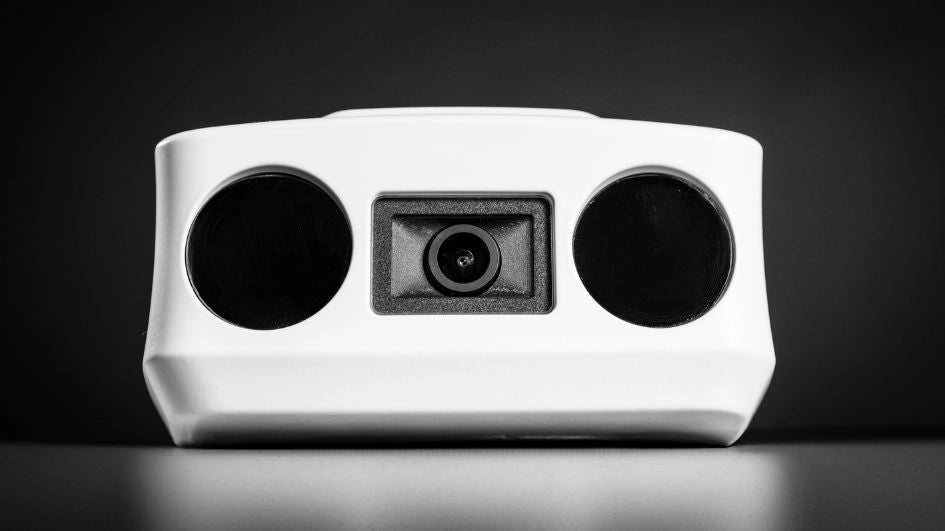

SEA.AI Watchkeeper 640 White - AI camera day/night motorboat
Ref : OSC-5110
Choose your option


SEA.AI Watchkeeper 320 White - AI day/night watch camera
Ref : OSC-5100
Choose your option


SEA.AI Sentry - 360° maritime surveillance AI system
Ref : OSC-6100
Choose your option


SEA.AI Competition 320 - AI collision avoidance system for offshore racing
Ref : OSC-2200
Choose your option


M364 30 Hz - 640 x 512 Stabilized Marine Thermal Camera
Ref : FL-E70525
Choose your option


M364C LR 30 Hz - Long-Range Thermal Camera with Visible Camera
Ref : FL-E70520
Choose your option


SEA.AI Brain - AI unit for marine thermal cameras
Ref : OSC-4000
Choose your option


SEA.AI Watchkeeper 640 S White - AI camera for sailboat day/night
Ref : OSC-5210
Choose your option


SEA.AI Watchkeeper 1280 White - long-range AI camera for powerboats
Ref : OSC-5120
Choose your option


SEA.AI Watchkeeper Lite White - AI camera day and twilight
Ref : OSC-5000
Choose your option


SEA.AI Competition 640 - AI collision avoidance system for offshore racing
Ref : OSC-2210
Choose your option


M300C 30 Hz - Stabilized Visible Marine Camera with 30x Optical Zoom
Ref : FL-E70605
Choose your option


M364C 30 Hz - Stabilized Thermal Camera with Visible Camera
Ref : FL-E70518
Choose your option


FIP460 — IP Camera in Stainless Steel 12 V — Max Resolution 3 MP (2304x1296)
Ref : RO-IRISFIP460
Choose your option


Augmented reality pack including an IP camera CAM300, an AR200 module, 1 m STNG backbone, T-connector and 10 m Raynet cable
Ref : T70581
Choose your option


Augmented reality pack including an IP camera CAM220, an AR200 module, a 1 m SeaTalkng backbone, a T-connector, and a 10 m Raynet cable
Ref : T70453
Choose your option


Augmented reality pack including an IP camera CAM210, AR200 module, 1 m SeaTalk NG backbone, T-connector, and 10 m Raynet cable
Ref : T70452
Choose your option


Neuboat Dock Base System
Ref : E70699
Choose your option


CAM300 Raymarine Dome Video Camera Marine Day & Night (IP Connection)
Ref : E70660
Choose your option


AR200 - Camera stabilization module for augmented reality
Ref : E70537
Choose your option

Thermal camera M232 (320 x 240, 9Hz) with tilt, rotation and electronic zoom
Ref : E70354
Choose your option


CAM220 Marine Dome IP Video Camera Day & Night (IP Connection)
Ref : E70347
Choose your option


CAM210 Marine Video Camera Day & Night (IP Connection)
Ref : E70346
Choose your option


Thermal and visible imaging camera for temperature measurement AX8
Ref : E70321
Choose your option

IP Camera, SS, POE+12V, IP CAM-1
Ref : 000-15876-001
Choose your option
Learn more
IP cameras: high-definition surveillance and maneuvering assistance
The marine IP camera provides an enhanced view of the ship's surroundings, facilitating complex docking maneuvers and monitoring blind spots (engine room, foredeck). Unlike older analog systems, IP technology offers superior digital resolution and simplified integration with the ship's Ethernet network.
Choosing your marine vision technology
A camera's performance depends on its sensor and its articulation capabilities.
-
Fixed vs. PTZ Cameras: Fixed models (e.g., Raymarine CAM210) are ideal for monitoring a specific blind spot. PTZ (Pan-Tilt-Zoom) cameras offer 360° scanning and powerful zoom, essential for identifying distant targets.
-
Optical vs. Thermal Vision: HD optical cameras require minimal light (infrared or harbor lighting). Conversely, thermal cameras (e.g., the FLIR range) detect heat signatures, enabling night vision in total darkness, through fog, or the detection of a man overboard.
-
Low light sensors: Models equipped with high-sensitivity CMOS sensors surpass standard cameras by delivering a detailed color image even at dusk.
Connectivity and protocols of network cameras
The IP architecture relies on the fluidity of data transfer to your multifunction displays (MFDs).
-
PoE (Power over Ethernet): This technology allows the camera to be powered and the video stream to be transmitted via a single RJ45 cable. This reduces cabling clutter in mast or gantry structures.
-
ONVIF standard: Protocol guaranteeing interoperability. An ONVIF-compatible camera can be viewed on chartplotters from different brands (Garmin, B&G, Furuno) provided they share the same Ethernet network.
-
H.264 / H.265 Compression: High-performance compression algorithms that maintain high image quality without saturating the edge network bandwidth.
Key features of IP cameras
Software ergonomics and mechanical resistance are the two pillars of a durable installation.
-
Full HD and 4K resolution: Essential for obtaining a precise level of detail when digitally zooming on beacons or obstacles.
-
IP66/IP67 waterproofing: Reinforced housings designed to withstand sea spray, salt corrosion and high-pressure cleaning.
-
Intelligent video analysis: Some models incorporate object recognition to automatically identify other ships or buoys, with the possibility of automatic tracking (Slew-to-Cue) coupled with radar or AIS.
-
Image rotation: Software function allowing the camera to be installed upside down or upside down while maintaining a straight image on the screen.
💡 Skysat Tip: For effective maneuvering assistance, install a camera with a wide-angle lens (over 90°) at the stern or on the side decks. Make sure your chartplotter software allows you to display the video in "mirror" mode: this simulates the effect of a car's rearview mirror, making harbor maneuvers much more intuitive.


