


Collection:
Cable


RJ45 female to BlueNet female network adapter
Ref : 010-12531-11
Choose your option


SBG Systems
SBG Ellipse USB to RS-232 Cable - 3 m
Ref : CA-ELI-USB-3M
Choose your option
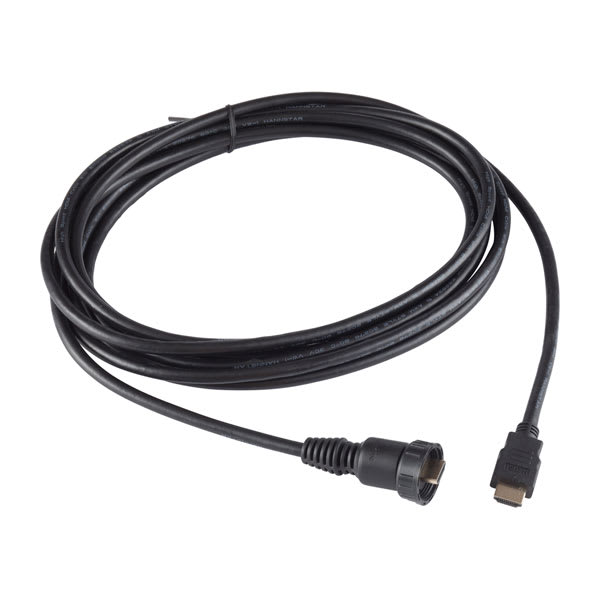
High-speed HDMI cable for GPSMAP
Ref : 010-12390-22
Choose your option


Power cable GP1871F and GP1971F
Ref : 00153325000
Choose your option


FAX-5 Active antenna FAX5 for FAX 30/410 without whip + 15m cable
Ref : 00001170200
Choose your option

FRU-CF-H16-02M POWER CABLE — FCV800
Ref : 00164108000
Choose your option

N2K Starter Kit
Ref : 000-0124-69
Choose your option

NMEA 0183 with audio cable
Ref : 010-12852-00
Choose your option

CAN to NMEA 2000 adapter cable without isolation
Ref : 010-12575-00
Choose your option

BlueNet™ to RJ45 network adapter cable
Ref : 010-12531-02
Choose your option

USB-C to micro-USB adapter cable
Ref : 010-12390-13
Choose your option

8-pin to 12-pin transducer adapter for fishfinder (with XiD)
Ref : 010-12122-10
Choose your option

ECU power cable with threaded collar
Ref : 010-11057-30
Choose your option

Cigarette lighter cable (NMEA 0183 socket)
Ref : 010-10085-00
Choose your option


SeaTalk NG branch 3 meters
Ref : A06040
Choose your option

213 Mast cable 36 m
Ref : 178-0D-001
Choose your option

4-pin power cable 2 meters
Ref : 000-00128-001
Choose your option

![[CYCLOPS] Multi Gateway Auxiliary Cable 0.3m — vue 1](http://skysat.fr/cdn/shop/files/cyclops-official-01-c5974daad2ba.png?v=1784728692&width=1500)
![[CYCLOPS] Multi Gateway Auxiliary Cable 0.3m — vue 2](http://skysat.fr/cdn/shop/files/cyclops-official-02-8a594f138efa.png?v=1784728693&width=1500)


![[CYCLOPS] SeaTalk NG Spur Cable 3m — vue 1](http://skysat.fr/cdn/shop/files/cyclops-official-01-a78da71d6f7f.png?v=1784728647&width=1500)
![[CYCLOPS] SeaTalk NG Spur Cable 3m — vue 2](http://skysat.fr/cdn/shop/files/cyclops-official-02-cd6b07c4023f.png?v=1784728648&width=1500)
![[CYCLOPS] RayNet to Ethernet (RJ45) Cable 3m — vue 1](http://skysat.fr/cdn/shop/files/cyclops-official-01-360e6b0040d8.png?v=1784728630&width=1500)
![[CYCLOPS] RayNet to Ethernet (RJ45) Cable 3m — vue 2](http://skysat.fr/cdn/shop/files/cyclops-official-02-94ac51ae8369.png?v=1784728631&width=1500)
RayNet to Ethernet (RJ45) Cable 3m
Ref : AC11
Choose your option

MOD-Z072-050+ RJ45 to RJ45 4-pair network cable - 5m
Ref : 00116789010
Choose your option

NMEA2000 cable for GP330B, 10m replacement for the standard 6m cable
Ref : 00119347010
Choose your option

Sonar adapter for double 9-pin wiring block
Ref : 000-13262-001
Choose your option

NMEA 2000 drop cable 6 m (19.7 ft)
Ref : 80-911-0213-00
Choose your option

NMEA 2000 drop cable 4 m (13.1 ft)
Ref : 80-911-0212-00
Choose your option

NMEA 2000 backbone cable 8 m (26.2 ft)
Ref : 80-911-0210-00
Choose your option

NMEA 2000 Power Isolator
Ref : 80-911-0137-00
Choose your option

NMEA 2000 drop cable 5 m (16.5 ft)
Ref : 80-911-0115-00
Choose your option


Ancor
NMEA 2000 planogram assortment
Ref : 270400
Choose your option


Ancor
NMEA 2000 backbone starter kit for a single device
Ref : 270203
Choose your option


Ancor
NMEA 2000 starter kit for two devices
Ref : 270202
Choose your option


Ancor
NMEA 2000 starter kit for a single device
Ref : 270201
Choose your option
![[GARMIN] Coupleur pour câble réseau BlueNet™ - Garmin image 1](http://skysat.fr/cdn/shop/files/01_3ffa23b7-b27a-4eb1-bf43-4ee3d9eed2ea.jpg?v=1781649821&width=1200)
Coupler for Garmin BlueNet™ network cable
Ref : 010-12531-00
Choose your option
Learn more
Cable: the lifeblood of your marine electronics
Cabling is the nervous system of your boat. A reliable network is crucial to ensuring the performance and safety of your marine electronics, whether for navigation, communication, or controlling onboard systems. At Skysat, drawing on our experience in offshore racing, we know that quality cabling means peace of mind. Discover our carefully curated selection of cables and accessories for a durable and high-performance installation.
choose the right cable for each application
The diversity of onboard equipment requires cables adapted to each need. From simple power cables to complex communication networks, choosing the right cable is crucial to avoid signal loss, interference, and failures. It is essential to consider the cable's cross-section, insulation, and resistance to marine conditions.
- DC power cable: Calculate the cross-section based on the distance and the device's power consumption (in Amps) to minimize voltage drop.
- NMEA 2000 cable: Ensure compatibility with the backbone network and choose waterproof connectors.
- Ethernet cable: For reliable data transmission, choose shielded cables of category 5e or higher.
- Coaxial cable: Select a low-loss cable for VHF, AIS and radar applications.
the importance of connectors and accessories
Quality cabling isn't just about the cables themselves. Connectors, cable glands, heat-shrink tubing, and other accessories play a crucial role in protecting connections from corrosion, moisture, and vibration. A neat and watertight assembly is essential to ensure the longevity of your installation.
- Waterproof connectors: Use IP67 or IP68 connectors for areas exposed to water spray.
- Heat shrink tubing: Ensure perfect insulation of connections and protect them against corrosion.
- Cable glands: Ensure watertightness at cable passages in bulkheads or decks.
- Terminal blocks: Facilitate the distribution of power and the connection of different equipment.
💡 Skysat's advice
Before you begin your wiring, create a precise diagram of your installation. Take into account the required cable lengths, access points, and potential hazards. A clear plan will prevent costly mistakes and facilitate future maintenance.


