


Collection:
Probes (Transducers)


Bronze through-hull CPT-120 transducer with CHIRP, depth sounder and temperature, direct CP100 connection, xx8 and AXIOM DV screens (10m cable)
Ref : A80350
Choose your option

B175H-W 1000W D/T Through-Hull Transducer Wide Beam Transducer Angle 20°
Ref : A80321
Choose your option
B175H-W 1000W D/T Through-hull transducer wide beam Transducer Angle 12°
Ref : A80320
Choose your option


B175H-W 1000W D/T Through-Hull Transducer Wide Beam Transducer Angle 0°
Ref : A80319
Choose your option


CHIRP CHIRP Sondeur temperature transducer CPT-200 for direct connection to CP200 (10m cable)
Ref : A80281
Choose your option


Raymarine CPT-110 CHIRP DownVision plastic through-hull transducer with temperature sensor, direct connection CP100, xx8 and AXIOM DV displays (10m cable)
Ref : A80277
Choose your option


B175H BB TH fairing 20 deg
Ref : A80050
Choose your option


B175M BB TH profiled 20 deg
Ref : A80049
Choose your option


B175L BB TH faired 20 deg
Ref : A80048
Choose your option


B175H BB TH profiled 12 deg
Ref : A80047
Choose your option


B175M BB TH faired 12 deg
Ref : A80046
Choose your option


B175L BB TH 12-degree profiled
Ref : A80045
Choose your option


B175H BB TH fairing block 0 deg
Ref : A80044
Choose your option


B175M BB TH fairing 0 deg
Ref : A80043
Choose your option


B175L BB TH faired 0 deg
Ref : A80042
Choose your option


B75H BB TH profiled 20 deg
Ref : A80037
Choose your option


B75M BB TH angled 20 deg
Ref : A80036
Choose your option


B75H BB TH angled 12 deg
Ref : A80035
Choose your option


B75M BB THprofiled 12 deg
Ref : A80034
Choose your option


B75H BB TH low-profile 0 deg
Ref : A80018
Choose your option


B75M BB TH profiled 0 deg
Ref : A80017
Choose your option


B75L BB TH profiled 0 deg
Ref : A80016
Choose your option
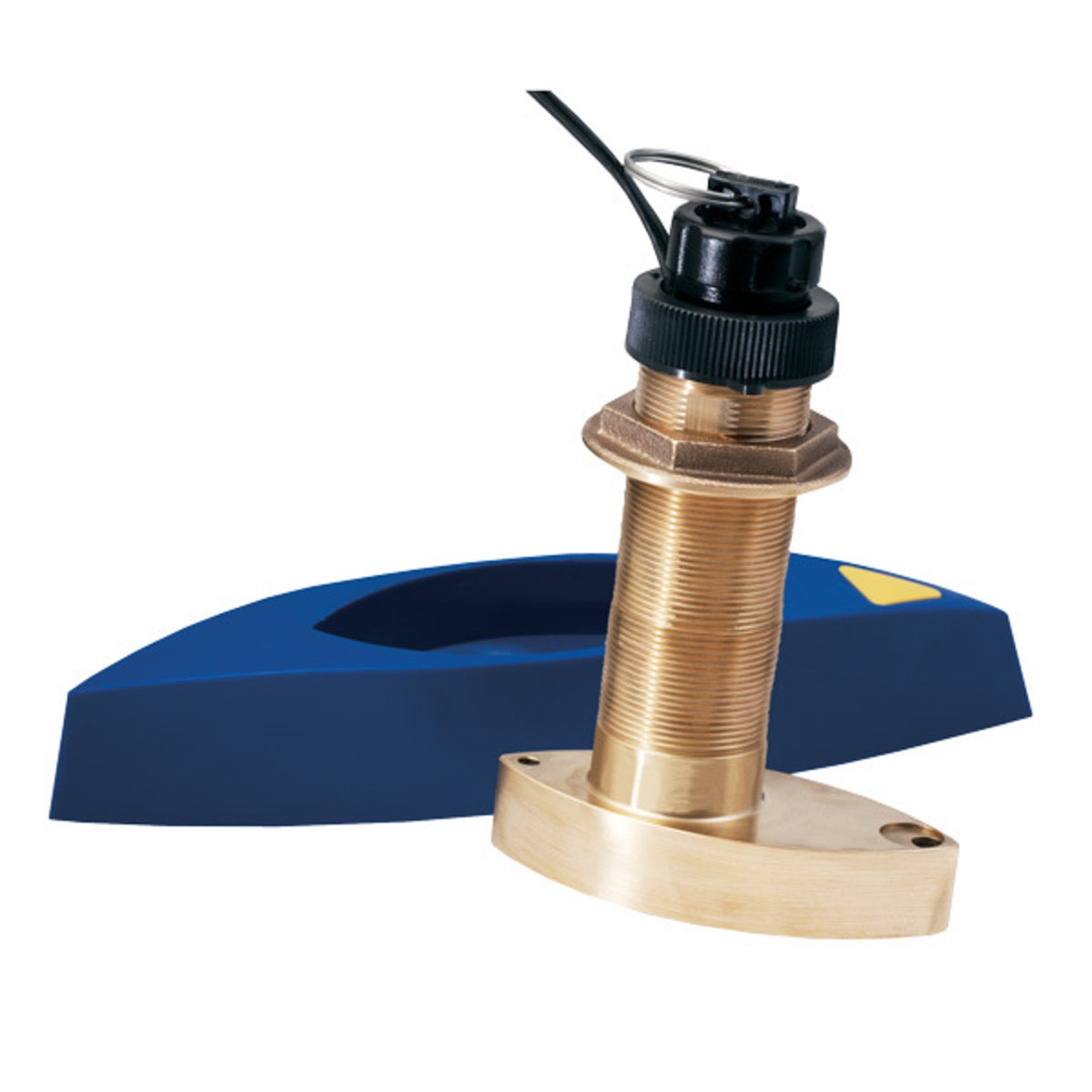

B744VL Raymarine bronze through-hull triducer long cable 13.8m
Ref : A26044
Choose your option


Bronze through-hull triducer cable 13.8m
Ref : A26043
Choose your option


DT800-0° depth sounder temperature transducer
Ref : A22165
Choose your option


Trisonde Analog DST800
Ref : A22154
Choose your option


DT800-12° Depth Sounder Temperature Transducer
Ref : A22112
Choose your option


ActiveTarget2 real-time sonar - Transducer only
Ref : 000-15962-001
Choose your option


GT56UHD-TM Sonar - UHD ClearVü/SideVü Transom-Mount Transducer
Ref : 010-13073-00
Choose your option


GT36UHD-TM Sonar - UHD ClearVü/SideVü Transom Mount
Ref : 010-13072-00
Choose your option


GT54UHD-TM Depth Sounder - UHD ClearVü/SideVü Transom Mount
Ref : 010-12909-00
Choose your option


GT24UHD-TM Sonar - UHD ClearVü Rear Mount
Ref : 010-12908-00
Choose your option

GT34UHD-THP Transom-Mount Sonar - UHD ClearVü Pair
Ref : 010-12776-11
Choose your option


GT34UHD-TH Transom-Mount Sonar - UHD ClearVü
Ref : 010-12776-10
Choose your option

GT34UHD-TM Sonar - UHD ClearVü Rear Mount
Ref : 010-12776-00
Choose your option


GT52HW-TM transducer - transom mount CHIRP/ClearVü/SideVü
Ref : 010-12405-00
Choose your option
Learn more
Probes (transducers): underwater vision at the service of your navigation
The transducer, or sonar, is the underwater eye of your boat. It converts electrical signals into sound waves and vice versa, allowing you to map the seabed, detect fish, and ensure safe navigation. At Skysat, drawing on our experience in offshore racing, we help you choose the transducer best suited to your needs. Discover our carefully curated selection and our tips for optimal system integration here.
choose the right probe technology
Choosing the right sonar technology is crucial and depends on your specific needs: depth, bottom type, boat speed, and target species. Different technologies exist, each with its own advantages and limitations. Understanding these differences is essential for optimizing your fishing or boating performance.
- Traditional (2D) transducers: A proven solution for detecting depth and bottom structure. Their conical beam offers wide coverage but limited resolution. Ideal for shallow water navigation.
- DownVision™ probes: Use CHIRP technology for more detailed bottom imaging, making it easier to identify structures and objects. They are less effective at depth than traditional probes.
- SideVision™ transducers: Offer a lateral view of the bottom, significantly increasing coverage area. Useful for locating specific fishing spots, but require precise installation.
- CHIRP probes: Emit a frequency-modulated signal, which improves resolution and target separation. They offer superior performance in all conditions, but are more expensive.
the importance of frequency and power
The frequency and power of the transducer influence its range and resolution. Lower frequencies penetrate deeper, while higher frequencies offer better resolution. Choosing a transducer suited to your navigation area is therefore essential. Power, meanwhile, determines the transducer's ability to detect targets in challenging conditions.
- Low frequency (50 kHz): Great depth, but low resolution. Suitable for deep-sea navigation and searching for large fish.
- High frequency (200 kHz): Shallow depth, but high resolution. Ideal for coastal fishing and structure identification.
- Low-frequency CHIRP: Excellent penetration and good resolution. An ideal compromise for demanding anglers.
- Power (Watts): The higher the power, the better the transducer can detect weak targets or targets in turbid water. Inadequate power can lead to noise and excessive power consumption.
compatibility and installation
Proper installation and compatibility of your transducer with your multifunction display are crucial for optimal performance. Check the communication protocols (NMEA 2000, SeaTalk NG) and ensure your transducer is correctly configured. Incorrect installation can lead to reading errors and signal loss.
- NMEA 2000 compatibility: Allows easy integration with other onboard electronic devices.
- Connectors: Ensure the probe connector is compatible with your multifunction display. Adapters may be required.
- Probe placement: An incorrect location can cause interference or inaccurate data readings. Consult the installation manual for specific recommendations.
- Software update: Ensure your multifunction display and probe are up to date with the latest software versions to benefit from the best performance.
💡 Skysat's advice
Before drilling through your hull to install a through-hull transducer, test the transducer through the hull with a bag of water. This will allow you to verify its proper functioning and optimize its placement safely.


