


Collection:
Through-hole probes

GT51M-TH Thru-Hull Sonar Transducer - CHIRP/ClearVü/SideVü
Ref : 010-01966-10
Choose your option

AIRMAR® B60 (12° tilt)
Ref : 010-10982-21
Choose your option

XSONIC Airmar B175M (12°)
Ref : 000-16203-001
Choose your option

XSONIC Airmar B175H-W (20°)
Ref : 000-16200-001
Choose your option

XSONIC Airmar B60 (20°)
Ref : 000-16188-001
Choose your option


Analog speedo ST900/P120 V/T - 13.7m cable
Ref : E70673
Choose your option

Airmar B75H - Bronze through-hull transducer 600W CHIRP (130-210kHz) with 20° tilted element + temperature - (8-pin)
Ref : 010-11634-22
Choose your option

Airmar B164 - Bronze Through-Hull 1kW (50/200kHz) Tilted Element (20°) + Temperature – (8-pin)
Ref : 010-11010-20
Choose your option

Airmar P319 - Plastic Through-Hull Transducer 600W (77/200kHz) with Tilted Element (12°) - (8-pin)
Ref : 010-10194-21
Choose your option

Through-hull bronze triducer 600w (B744V) with shoe
Ref : A66091
Choose your option
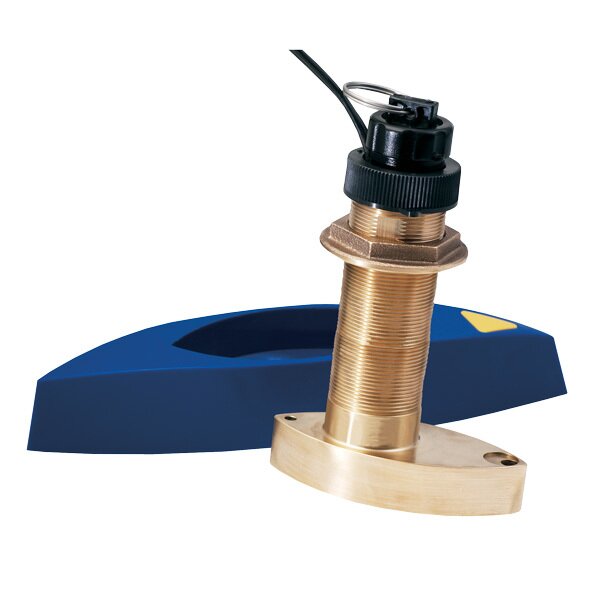
Long bronze through-hull Triducer 600w (B744VL) with fairing block
Ref : A66092
Choose your option
SS175H-W 1000W D/T Through-hull transducer wide beam Transducer Angle 20°
Ref : A80506
Choose your option
B275LH-W 1000W D/T Bronze Through-Hull Wide-Beam Low-High Sonde with Shoe
Ref : A80322
Choose your option

R109 D/T Through-Hull Low-Medium 2KW Molded Transducer
Ref : A80040
Choose your option

R109LH-W 2000W D/T Through-hull wide-beam Low-High depth sounder
Ref : A80323
Choose your option
R509LH-W 3000W D/T Through-hull wide-beam transducer
Ref : A80324
Choose your option

Depth sounder B164-12° 50/200 kHz 1kW (CP3xx)
Ref : A102112
Choose your option

Depth sounder B164-20° 50/200 kHz 1kW (CP3xx)
Ref : A102113
Choose your option

Depth sounder B164 0 degrees 50/200 kHz 1kW (CP3xx)
Ref : A102137
Choose your option

P/T through-hull transducer 0° stainless steel profiled 200/50 kHz 1KW SS164 (CP370)
Ref : A80451
Choose your option

P/T through-hull transducer 20° stainless steel profiled 200/50 kHz 1KW SS164 (CP370)
Ref : A66099
Choose your option
Stainless steel through-hull depth/temperature transducer SS175M Wide Beam CHIRP 1kW 20° beam
Ref : A80802
Choose your option
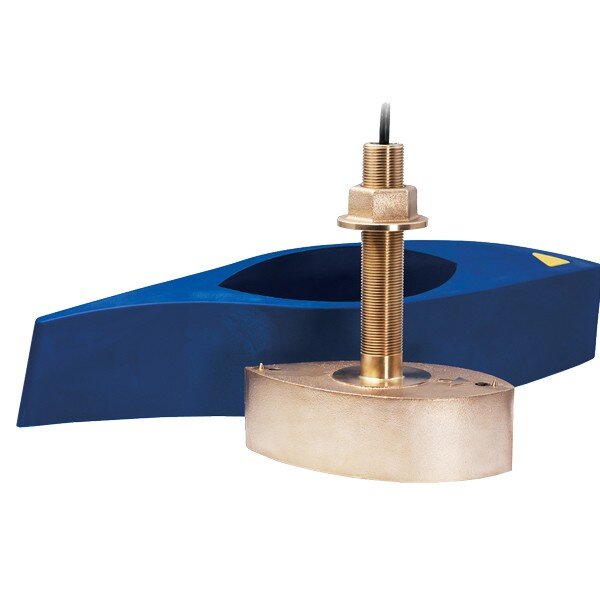
B265LH broadband through-hull transducer
Ref : A80010
Choose your option

SS175L Low CHIRP 1KW D/T Transom-Mount Sonar 20° Angle
Ref : A80504
Choose your option
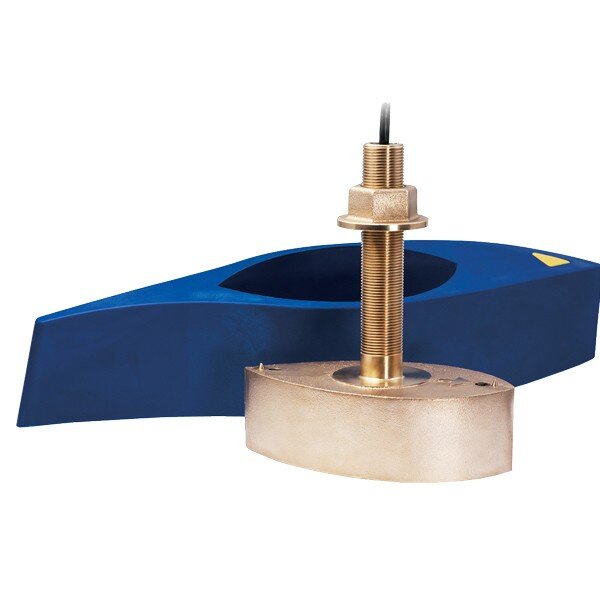
B265LM Broadband Through-Hull Depth Sounder
Ref : A80011
Choose your option

SS175M Medium CHIRP 1KW D/T Transom Mount Sonar 20° Angle
Ref : A80505
Choose your option
R509 D/T Trailing-Edge Low-Medium Hi Performance 3KW Transducer
Ref : A80211
Choose your option
R509 D/T Transom-Mount Low-High Hi Performance 3KW Transducer
Ref : A80210
Choose your option

Plastic SI thru-hull transducer (XPTH-9-HDSI-180-T)
Ref : SH-B06T
Choose your option

IDST-820 depth/speed/temperature sensor, bronze housing
Ref : 000-15736-002
Choose your option

Depth/speed/temperature sensor IDST-820, plastic housing
Ref : 000-15735-002
Choose your option

Echonautics
CB101D600 — 50/200 kHz dual-frequency depth sounder, 600 W, bronze through-hull with stem, depth and temperature, supplied without fairing sleeve
Ref : EC-CB101D600
Choose your option

Echonautics
BT70M600-18 — CHIRP fishfinder middle band 80–130 kHz 600 W, low-profile bronze through-hull, 18° tilt, depth and temperature
Ref : EC-BT70MA600-18
Choose your option

Echonautics
BT70M300-18 — CHIRP transducer mid-band 95-155 kHz 300 W, low-profile bronze through-hull, 18° tilt, depth and temperature
Ref : EC-BT70MA300-18
Choose your option

SS164-20 — Through-hull stainless steel 1 kW 50/200 kHz tilted ceramic 20°, depth and temperature
Ref : AI-41-314-2-01
Choose your option

B275LH-W — CHIRP through-hull bronze dual wide-band 1 kW 42-65 / 150-250 kHz transducer
Ref : AI-B275LHW-002
Choose your option
Learn more
Through-hole probes: exploring the seabed with precision
The through-hull transducer is a crucial component of your marine electronics, providing a detailed view of the seabed for navigation, fishing, and safety. At Skysat, we rigorously select the highest-performing through-hull transducers, prioritizing reliability and data accuracy. Discover a complete range tailored to your specific needs, the result of our experience in offshore racing and our expertise in system integration.
choose the right probe technology
The choice of transducer technology is crucial to the quality of the information you receive. From traditional models to scanning transducers and CHIRP versions, each technology offers specific advantages. Understanding these differences is essential to optimizing your experience at sea.
- Traditional probes: Reliable and proven, ideal for general use and good coverage.
- CHIRP probes: Offer superior image resolution and better target separation, particularly effective for fishing.
- Scanning probes (SideScan/DownScan): Allow detailed visualization of the seabed and submerged structures, useful for shipwreck searches or obstacle avoidance.
- Multifunctional probes: Combine several technologies for maximum versatility.
installation and compatibility of through-hole probes
Proper installation and compatibility with your electronic system are essential to ensure the correct operation of your thru-hull transducer. Improper installation can impact performance and compromise data reliability. Consider the shape of your hull, the ideal location, and the communication protocols compatible with your multifunction display.
- Deadrise angle: The angle of the hull influences the choice of probe and sometimes requires the use of adapter shims.
- NMEA 2000/SeaTalk NG connectivity: Ensure compatibility with your onboard network for seamless data integration.
- Materials: Choose a material compatible with your case (bronze, plastic, stainless steel) to avoid electrolytic corrosion.
- Immersion depth: A probe that is too deep can generate turbulence and affect data quality.
factors influencing performance
Several factors can influence the performance of a through-hull transducer, including water quality, boat speed, and electrical noise. Understanding these factors will allow you to optimize your transducer settings and obtain accurate and reliable readings.
- Turbulence and cavitation: Reducing speed in turbulent areas can improve image quality.
- Gain and frequency settings: Adjust the parameters according to environmental conditions to optimize target detection.
- Electrical interference: Check wiring and insulation to minimize electrical noise that can affect performance.
- Water salinity and temperature: These factors can influence the propagation of sound waves and require adjustments to the probe parameters.
💡 Skysat's advice
Before installing your through-hole probe, perform a dry run to check for interference with other equipment and to optimize its placement. Feel free to contact us for personalized installation support.


