


Collection:
Navigation center


B&G Hercules WTP sailing navigation processor
Ref : 000-15136-001
Choose your option

Basic navigation processor pack for B&G Triton Edge sailing computer
Ref : 000-11548-002
Choose your option


FI70PK1 — FURUNO FI70 Multifunction Instrument Pack Speed/Depth/Wind
Ref : IMD03413001PK1
Choose your option


RD33 - 4.3-inch Marine Data Repeater
Ref : IMD02361001
Choose your option


NMEA2000 MICRO5C MFFFFF Certified Adapter
Ref : OD-NAW-MM1MF1MF4001
Choose your option
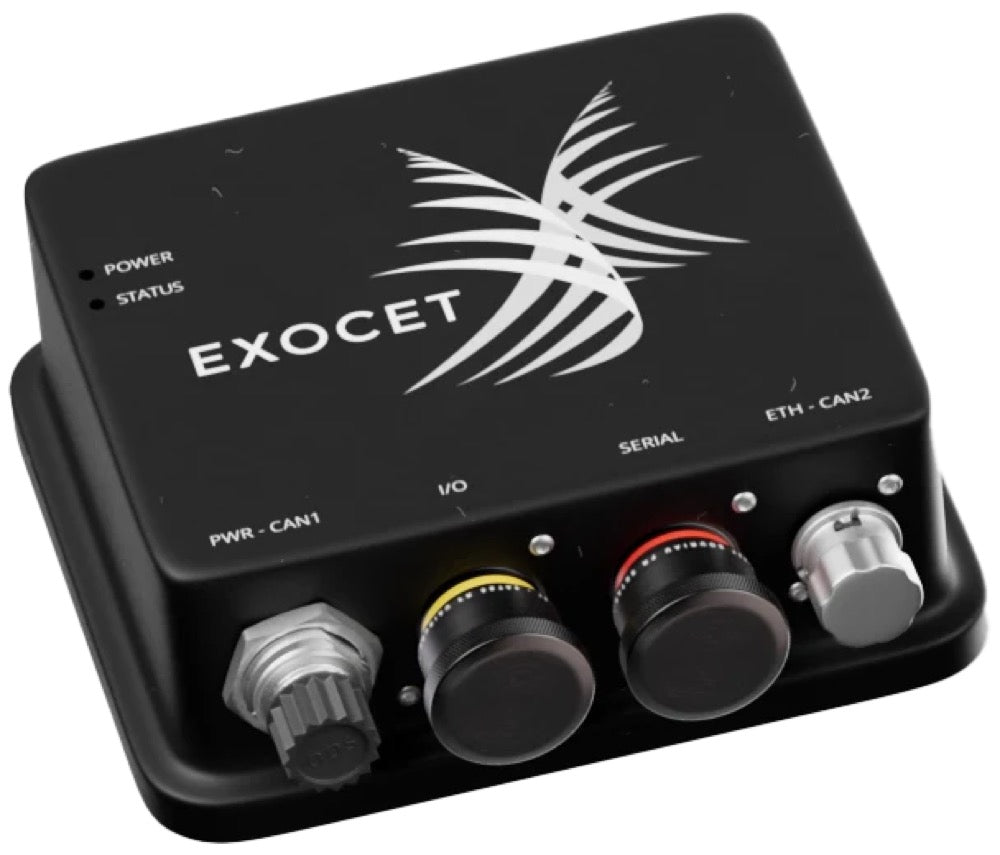

Exocet Essential Processor
Ref : 200-003-001
Choose your option


Exocet Silver Processor
Ref : 200-002-001
Choose your option


Exocet Blue Processor
Ref : 200-001-002
Choose your option


Triton Edge processor
Ref : 000-15134-001
Choose your option


Hercules® expansion processor
Ref : 000-15137-001
Choose your option


Hercules® Processor
Ref : 000-15135-001
Choose your option


H5000 Series Extension
Ref : 000-11726-001
Choose your option


H5000 Analog Extension
Ref : 000-11725-001
Choose your option

Unlock code for H5000 Hercules CPU to Performance
Ref : 000-11759-001
Choose your option

H5000 Hydra 5000 System Unlock Code
Ref : 000-11760-001
Choose your option
Learn more
Navigation systems: orchestrating data on board
The navigation system is the brain of your onboard electronics. It aggregates information from various sensors (wind vane/anemometer, log/speedometer, depth sounder, compass) to provide a complete view of the marine environment. At Skysat, drawing on our experience in offshore racing, we guide you in choosing and integrating a high-performance, reliable navigation system tailored to your needs.
Here you will find a rigorous selection of control units, from the simplest models to the most sophisticated systems, as well as advice on how to optimize their installation and configuration.
The sensors: the source of the data
A navigation system's value depends entirely on the quality of the sensors that power it. Therefore, choosing the right sensors is crucial for obtaining accurate and reliable information, essential for navigation and safety.
- Wind vane-anemometer: Measures wind direction and speed, crucial data for optimizing sail trim and anticipating weather conditions. Wired or wireless models, with or without a heel angle sensor.
- Log/speedometer: Indicates the boat's speed relative to the water. Various technologies exist, from the traditional propeller log to the more precise ultrasonic log, which is less prone to fouling.
- Depth sounder: Measures the water depth under the keel. Modern depth sounders offer advanced features such as fish detection and seabed mapping.
- Compass: Provides heading information. Fluxgate compass, solid-state compass (AHRS) for increased accuracy, especially in case of significant heel.
Integration and compatibility: the key to a high-performing system
Integrating the various components of the navigation system is a crucial aspect that should not be overlooked. Ensure the compatibility of the sensors and the system, and prioritize standardized communication protocols such as NMEA 2000 or SeaTalk NG for simplified installation and optimal scalability.
- NMEA 2000: Standardized digital communication protocol, allowing the exchange of data between different electronic devices on board.
- SeaTalk NG: Proprietary communication protocol developed by Raymarine, compatible with NMEA 2000 via an adapter.
- Interfaces: Check for the presence of the necessary interfaces (NMEA 0183, NMEA 2000, SeaTalk NG) on the control unit and sensors.
- Multiplexers: Allow data from different sources to be combined and transmitted to a single device.
data display and processing
The navigation system must be able to display data clearly and intuitively, and process it to provide useful navigational information. Some models offer advanced features such as true wind calculation, speed polar diagrams, or data display on a multifunction screen.
- Multifunction displays: Display data from the navigation system, as well as other information (maps, radar, AIS).
- Dedicated displays: Offer a clear and concise visualization of key data (heading, speed, depth, wind).
- Navigation software: Allows you to view and analyze data from the power plant on a computer or tablet.
- Alarms: Configurable to alert the navigator in case of exceeding thresholds (depth, strong wind, etc.).
💡 Skysat's advice
When installing your wind turbine, pay particular attention to the position of the sensors. A poorly positioned wind vane/anemometer can be affected by turbulence created by the mast or sails, thus distorting wind measurements. Feel free to contact us for a personalized assessment of your system.


