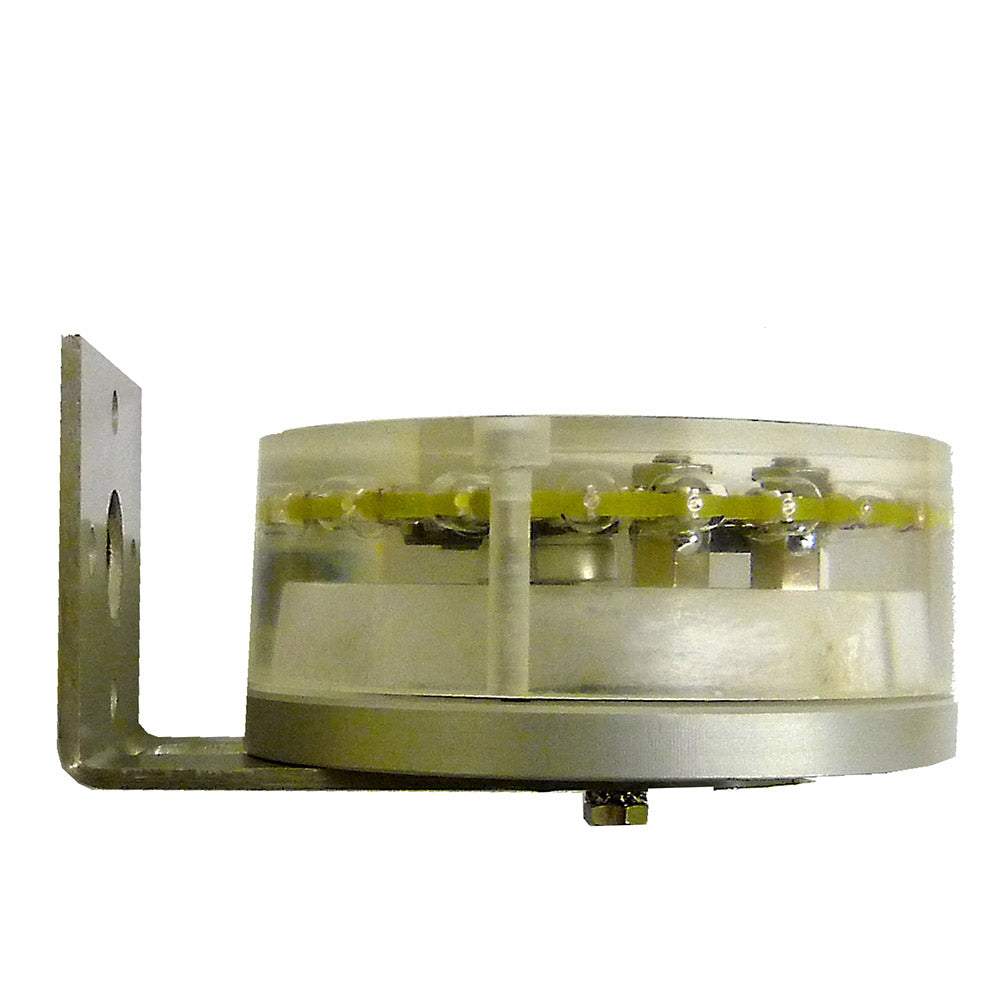
CableClam 0.83" Cable Gland
Available in stock
Technical specifications
Technical specifications
| Maximum cable diameter (mm) | 11.18 |
| Maximum connector diameter (mm) | 21.08 |
| Mount type | Low Profile |
| Splittable | Yes |
| Gasket Drilling Required | Yes |
| Gasket material | Rubber |
| Gasket Slitting Required | Yes |
| Installation Screw Tightening Method | Progressive tightening |
| Mounting Screw Size Imperial | #8 |
| Overall height mm | 22.92 |
| Overall length mm | 55.03 |
| Overall width mm | 55.03 |
| Product range | CableClam |
| Product type | Cable gland |
Detailed description
Detailed description
The BLUE SEA CableClam 0.83" is a cable gland designed to ensure reliable sealing of cable entries through marine decks and bulkheads. It is a key component for managing electrical and electronic cables across surfaces exposed to marine elements.
Design and dimensions
This cable gland consists of a deck ring, a sealing gasket, and a compression ring. Its overall dimensions are 2.17 inches (55.03 mm) in length, with a height of 0.90 inch (22.92 mm) when installed. The gasket diameter is 0.78 inch (19.69 mm). Installation requires a mounting hole for a #8 screw, ensuring a secure attachment to the surface. The design allows for discreet and functional integration, similar to other sealing solutions from BLUE SEA or competitors like Seaview, but with a focus on simplicity and efficiency for specific cable diameters.
Installation and performance
Installing the CableClam 0.83" involves drilling the gasket to match the cable diameter, then slitting the gasket from its edge to the center. The deck ring and gasket are then secured, the cable inserted, and the gasket pressed into the compression ring before tightening the latter onto the deck ring. This method ensures progressive compression of the gasket around the cable, creating a watertight seal. It is critical not to overtighten the screws to avoid damaging components, ensuring long-term durability of the installation and maintaining sealing integrity over time.
Expert opinion
Expert opinion

Pol CONIN
Digital Manager
« Mastering watertightness of single cable penetrations »
Your payment information and data are processed securely.