


Collection:
C-Zone
Need help choosing?


Marine Networks, Interfaces, and Bridges
3 produits

CZone SBH 15m temperature sensor
Ref : 80-716-0032-00
Choose your option


Touch 10 Gen 2 CZone Display Kit
Ref : 80-911-0216-00
Choose your option


7" Touchscreen Kit
Ref : 80-911-0200-00
Choose your option
Câbles et cordons
5 produits

NMEA 2000 drop cable 6 m (19.7 ft)
Ref : 80-911-0213-00
Choose your option

NMEA 2000 drop cable 4 m (13.1 ft)
Ref : 80-911-0212-00
Choose your option

NMEA 2000 backbone cable 8 m (26.2 ft)
Ref : 80-911-0210-00
Choose your option

NMEA 2000 Power Isolator
Ref : 80-911-0137-00
Choose your option

NMEA 2000 drop cable 5 m (16.5 ft)
Ref : 80-911-0115-00
Choose your option
Cables
4 produits

Connector and gasket kit for Contact 6 PLUS
Ref : 80-911-0179-00
Choose your option

3-module smart harness, 5 m (16.5 ft)
Ref : 80-911-0172-00
Choose your option

2-pin power cable 2 m long
Ref : 80-911-0032-00
Choose your option
CZone Connect 1 Harness
Ref : 30-000353
Choose your option
DC/DC
1 produit


Mac Plus 48/24-30 IP23 CZone DC-DC converter-charger
Ref : 81203305
Choose your option
NAVICO GROUP
1 produit

DEUTSCH Crimping Tool
Ref : 80-911-0133-00
Choose your option
I/O Modules
19 produits

CZONE CONNECT 1
Ref : 80-911-0270-00
Choose your option

CZone 68 ohm resistor ladder module
Ref : 80-911-0235-00
Choose your option

CZONE switch INPUT RESISTOR MODULE
Ref : 80-911-0234-00
Choose your option


Control X with connectors
Ref : 80-911-0231-00
Choose your option

Control X PLUS with connectors
Ref : 80-911-0230-00
Choose your option

CZ CONTACT 6 PLUS B/SENSE with connector kit
Ref : 80-911-0161-00
Choose your option

Contact 6 PLUS with connectors and seal
Ref : 80-911-0160-00
Choose your option

CZone COI/Touch 5 Suitcase Display
Ref : 80-911-0130-00
Choose your option

Touch 5 Kit
Ref : 80-911-0124-00
Choose your option


CZone COI without connectors
Ref : 80-911-0120-00
Choose your option

CZone ACOI DIN MNT PCA kit with 230 V cable
Ref : 80-911-0082-00
Choose your option

AC voltage transducer for Digital & CZone
Ref : AC-VSEN-4
Choose your option


Combined output interface COI with connectors
Ref : 80-911-0119-00
Choose your option

MasterBus Bridge Interface Module
Ref : 80-911-0072-00
Choose your option

CZone SI Signal Interface
Ref : 80-911-0013-00
Choose your option

CZone SCI switch control interface
Ref : 80-911-0011-00
Choose your option

CZone OI Output Interface
Ref : 80-911-0009-00
Choose your option

CZone MI meter interface
Ref : 80-911-0005-00
Choose your option
Interfaces & Gateways
3 produits

DDS Interface only
Ref : 80-911-0260-01
Choose your option


CZone Control X standalone interface
Ref : 80-911-0231-01
Choose your option


Control X Plus - Interface Only
Ref : 80-911-0230-01
Choose your option
Switches and sockets
9 produits

12-way waterproof keypad (landscape)
Ref : 80-911-0165-00
Choose your option

12-way waterproof keypad (portrait)
Ref : 80-911-0164-00
Choose your option

MOM ON/OFF/ON toggle switch with blue LED
Ref : 80-911-0071-00
Choose your option

Momentary push button (ON)OFF 3.3 V blue LED
Ref : 80-911-0062-00
Choose your option

3.3 V ON/OFF latching pushbutton with blue LED
Ref : 80-911-0061-00
Choose your option

Toggle switch MOM ON/OFF/MOM ON red LED
Ref : 80-911-0040-00
Choose your option

6-way digital switch
Ref : 80-911-0134-00
Choose your option

ON/OFF push button with red LED, 3.3 V
Ref : 80-911-0063-00
Choose your option

Wireless remote control kit for battery switches models 701-MD and 720
Ref : 80-911-0045-00
Choose your option
Contactors, solenoids & disconnectors
1 produit

CZone 48V Soft Start Module with Mounting Bracket and Safety Relay
Ref : 72-000481
Choose your option
Battery isolators
1 produit

Remote battery switch CZone 275 A 32 V
Ref : 701-MDCZ
Choose your option
Network wiring
16 produits
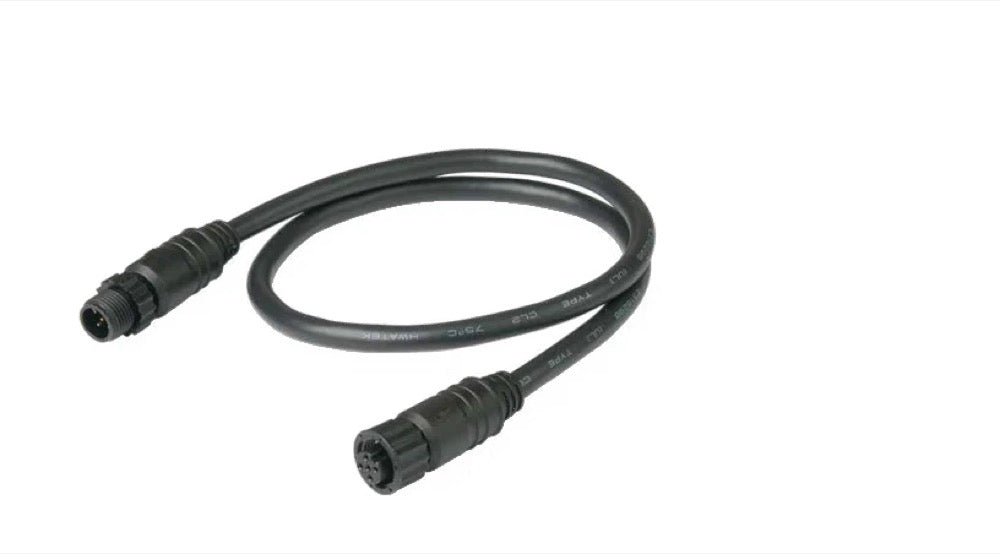
NMEA 2000 3m T-Connector Cable
Ref : 80-911-0211-00
Choose your option

NMEA 2000 2 m T-connector cable
Ref : 80-911-0118-00
Choose your option

NMEA 2000 T-Connector Cable 1 m
Ref : 80-911-0117-00
Choose your option
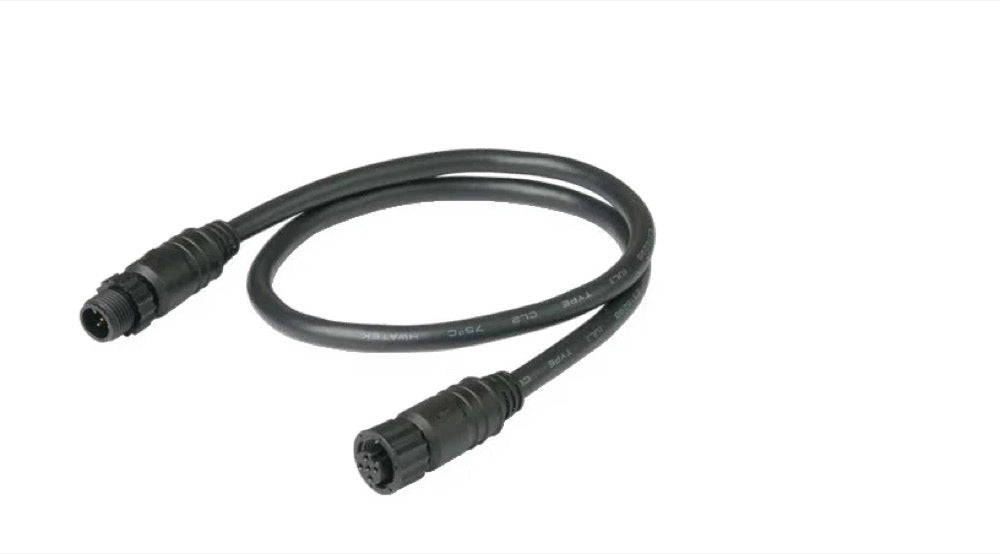
NMEA 2000 0.5m T-Connector Cable
Ref : 80-911-0116-00
Choose your option

SCI 5m cable for adapting to RJ45 push buttons
Ref : 80-911-0088-01
Choose your option

SCI 2m cable for adapting to RJ45 push buttons
Ref : 80-911-0087-01
Choose your option
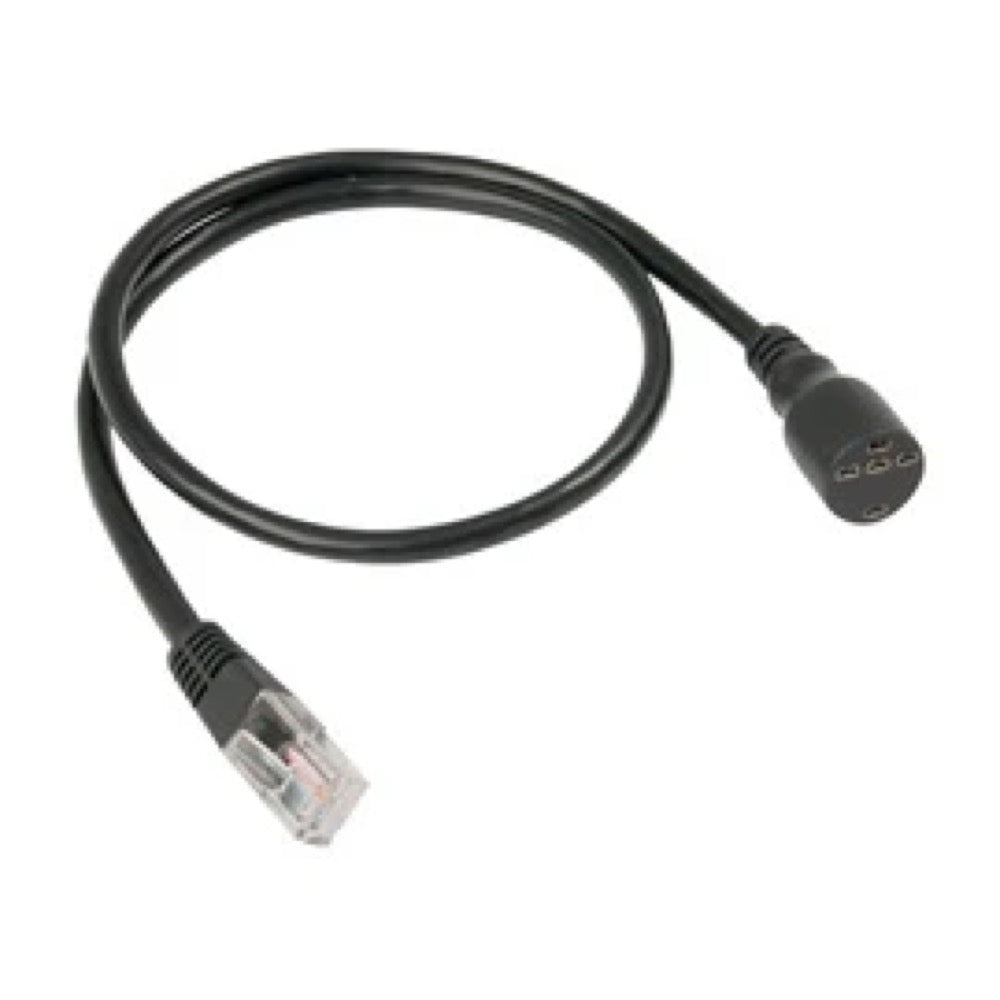
SCI cable 1m to adapt to RJ45 push buttons
Ref : 80-911-0086-01
Choose your option

4-way T-connector for NMEA 2000 network
Ref : 80-911-0048-00
Choose your option

2-way T-connector for NMEA 2000 network
Ref : 80-911-0047-00
Choose your option

NMEA 2000 network T-connector
Ref : 80-911-0029-00
Choose your option

NMEA 2000 power cable with T - 1 m
Ref : 80-911-0028-00
Choose your option

NMEA 2000 backbone cable 2 m (6.5 ft)
Ref : 80-911-0027-00
Choose your option

NMEA 2000 network extension cable 0.5 m (1.6 ft)
Ref : 80-911-0026-00
Choose your option

NMEA 2000 backbone cable, 10m
Ref : 80-911-0025-00
Choose your option
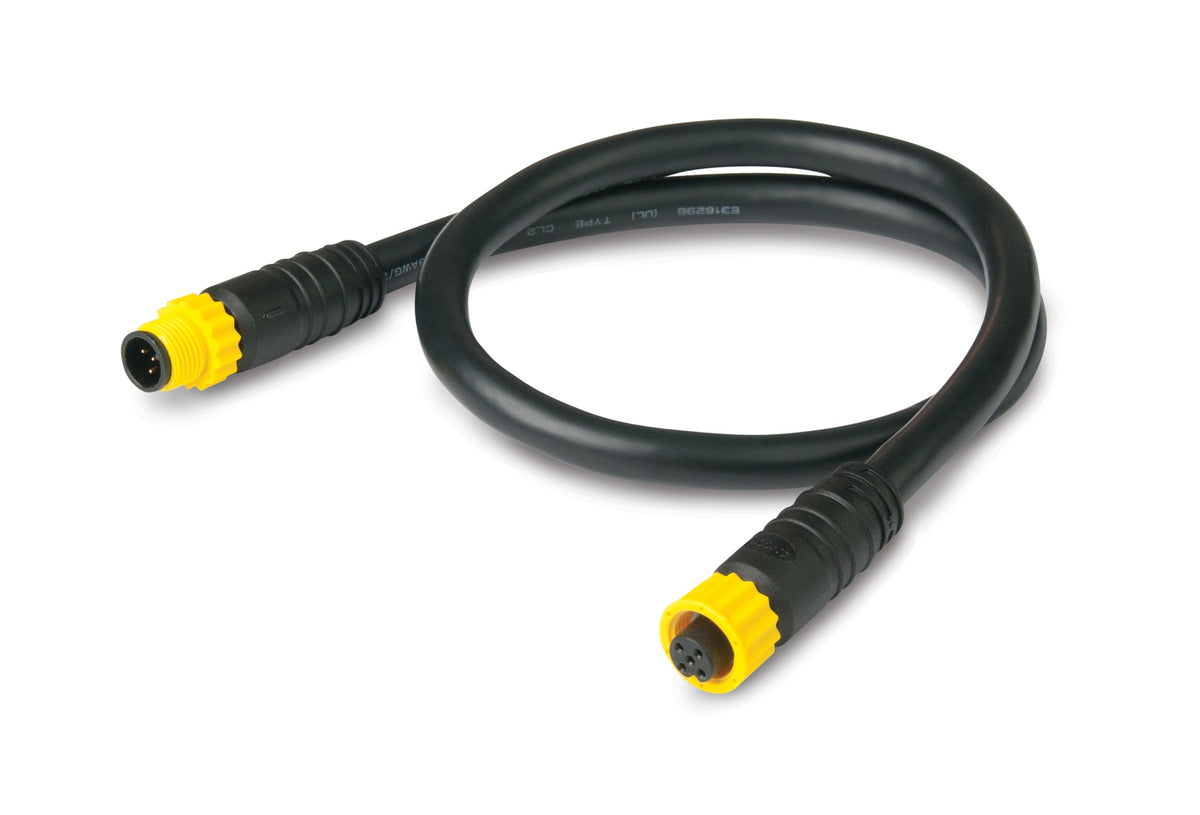
NMEA 2000 backbone cable 5m
Ref : 80-911-0024-00
Choose your option


Mastervolt-CZone interconnecting cable 1 m
Ref : 77060100
Choose your option
Control panels
2 produits

Waterproof 6-way keyboard (portrait)
Ref : 80-911-0163-00
Choose your option

Waterproof 6-way keyboard (landscape)
Ref : 80-911-0162-00
Choose your option
Battery monitors
1 produit


MasterShunt 500 CZone Battery Controller
Ref : 77020115
Choose your option
Network accessories
2 produits

WiFi MasterBus Connector
Ref : 80-911-0095-00
Choose your option

NMEA 2000 Network Bridge Interface Module
Ref : 80-911-0057-00
Choose your option
Learn more
C-Zone: Digital Switching Systems and Intelligent Electrical Management
C-Zone, developed by BEP Marine and now an integral part of the Mastervolt ecosystem, is revolutionizing onboard electrical management by replacing traditional circuit breaker panels with fully programmable digital switching systems. Since 2005, C-Zone technology has allowed recreational boaters and professional shipowners to control all onboard electrical circuits via elegant touchscreen interfaces, mobile applications, or voice commands, while benefiting from real-time monitoring of each circuit. NMEA 2000 integration ensures seamless synergy with navigation electronics and energy management systems. Skysat has mastered the complete architecture of C-Zone systems to offer reliable, scalable installations perfectly tailored to the specific needs of each vessel.
Architecture and Operating Principle
The C-Zone system is based on a distributed architecture where intelligent switching modules (Output Interfaces) replace mechanical fuses and circuit breakers. These modules, controlled via a proprietary CAN-Bus network or via NMEA 2000, allow for complete flexibility in configuration and expansion without modifying existing wiring.
- Output Interface (OI) Modules: The heart of the system, these modules integrate 6, 8, or 12 output circuits, each individually protected by self-resetting electronic fuses. Each output can switch up to 15A (depending on the model) with overload, short-circuit, and over-temperature detection. Outputs are programmable in ON/OFF mode, dimmable (0-100% brightness variation), or PWM for variable-speed pumps. Compact mounting in electrical enclosures with optimized heat dissipation.
- CAN-Bus and NMEA 2000 Communication: C-Zone modules communicate via a dedicated CAN-Bus network (proprietary C-Zone) or directly over the ship's NMEA 2000 backbone for COI (Connected Output Interface) versions. This latter option eliminates the need for a separate network and allows seamless integration with chartplotters, multifunction displays, and energy monitoring systems. Simplified serial topology cabling with Power over CAN (POC) for smaller modules.
- Controllers and Gateways: The Mode Controller (MC) is the central brain of the system in traditional C-Zone architectures, storing the complete configuration and managing automation rules. For NMEA 2000 systems, the Network Gateway Bridge connects the proprietary C-Zone network to the NMEA 2000 backbone, enabling control from compatible MFDs (Raymarine Axiom, Simrad NSS evo3, B&G Zeus3). Multiple gateways are supported for segmentation and redundancy.
Multiple Control Interfaces
One of C-Zone's major strengths lies in the diversity of control interfaces available, allowing users to choose the most suitable solution for each situation: elegant touch controls in the cockpit, familiar physical switches, or mobile control from smartphone/tablet.
- Touchscreen Panels: High-resolution 5", 7", and 10" color screens offer intuitive control of all circuits with instant visual feedback on status (ON/OFF, intensity, consumption). Customizable graphical interface with configurable icons and circuit names. Displays battery level, solar/wind production, and system alarms. Flush or surface mounting with IP65 sealing gaskets for harsh marine environments. Automatic backlighting with ambient light sensor and red night mode.
- Physical Switch Interfaces: Modules with 4, 6, or 8 waterproof toggle switches allow for traditional touch control while benefiting from the intelligence of the C-Zone system. Each switch can be programmed to control a single circuit, a group of circuits, or trigger a complex scenario. Integrated status LEDs with different colors indicate the circuit's status. Ideal for critical functions requiring immediate access without touchscreen interaction (bilge pumps, navigation lights, alarms).
- Mobile Applications and Remote Control: The C-Zone Mobile app, available for iOS and Android, allows for complete monitoring and control from a smartphone or tablet via Wi-Fi or Bluetooth connection (requires a compatible Wi-Fi Gateway or MFD module). Push notifications are sent in case of alarms or events (bilge pump activation, low battery, shore power loss). Secure remote control is available from outside the vessel for preheating, ventilation, or pre-boarding status checks. Voice assistant compatibility (Alexa, Google Assistant) is available through third-party integrations for voice control.
Advanced Monitoring and Diagnostics
Beyond simple ON/OFF control, C-Zone offers detailed monitoring capabilities for each electrical circuit, enabling optimization of consumption, early detection of anomalies, and predictive maintenance of onboard electrical equipment.
- Current Measurement by Circuit: Each output of the Output Interface modules continuously measures the current consumed with an accuracy of ±5%. Real-time display on all control interfaces with consumption history and trend graphs. Rapid identification of faulty equipment (blocked pump drawing too much current, short circuit, burnt-out bulb). Automatic calculation of the vessel's total power consumption and projection of remaining battery life.
- Smart Alarms and Notifications: Configurable alarm system with customizable thresholds for each circuit (overload, undervoltage, excessive activation time, abnormal number of cycles). Visual notifications on touchscreens, audible notifications via dedicated buzzers, and push notifications to mobile apps. Programming of complex rules such as "alarm if bilge pump activates more than 5 times in 1 hour" or "notify if total consumption exceeds 50A for more than 30 minutes." Alarm history with timestamps for post-incident analysis.
- Diagnostics and Predictive Maintenance: Automatic recording of usage statistics for each piece of equipment: number of activations, total operating time, cumulative consumption, and current peaks. This data enables maintenance planning based on actual usage rather than arbitrary fixed intervals. Detection of progressive degradation (a pump whose inrush current gradually increases, indicating bearing wear; a light dimmer whose standby power consumption increases, signaling an electronic failure).
Automation and Intelligent Scenarios
The C-Zone system's complete programmability allows for the creation of sophisticated automation scenarios that improve comfort, security, and energy efficiency without manual intervention. Rules can be based on time, events, combined conditions, or triggered manually.
- Navigation Scenarios: "Departure from Port" mode automatically activates all necessary systems: navigation screens turn on, autopilot is activated, air conditioning and water heater are switched off to reduce power consumption, and the system switches to energy-saving mode. "Anchorage" mode automatically reduces interior lighting, activates anchor lights, and switches off non-essential equipment after a delay. "Night" mode switches off all exterior lights except regulatory lights, switches interior lighting to red/dimmed mode, and deactivates all alarms except critical ones.
- Automatic Energy Management: Intelligent load shedding based on battery level: if the state of charge (SOC) drops below 40%, non-critical loads (water heater, air conditioning, watermaker) are automatically and progressively shut down while essential systems (bilge pumps, navigation, VHF communications) are maintained. The generator automatically starts if the battery reaches a critical threshold or if consumption exceeds solar/wind power generation capacity. Seamless switching between power sources (shore power → generator → battery) with configurable priorities and timers to prevent rapid cycling.
- Safety and Monitoring: Automatic activation of bilge pumps upon detection of water level via sensors, with an alarm for prolonged or frequent operation. Automatic disconnection of non-waterproof circuits (interior power outlets, sensitive electronic equipment) if water detectors are activated to prevent short circuits. Simulation of onboard presence when the vessel is left in port: random activation of interior lighting according to a programmed schedule, occasional activation of fans. Geofencing with alarms if vessel movements are detected outside the authorized zone (requires GPS integration via NMEA 2000).
System Installation and Integration
Installing a C-Zone system requires careful planning of the network and electrical architecture to ensure reliability and scalability. Skysat recommends a modular approach that allows for future expansion without a complete rewiring.
- Cabling and Network Architecture: The C-Zone or NMEA 2000 backbone must be wired with marine-grade shielded twisted pairs (DeviceNet or NMEA 2000 certified) with 120Ω terminations at both ends. Maximum segment length: 200m for C-Zone, 100m for NMEA 2000, extendable via repeaters for larger installations. Separate 12V mains power supply protected by a dedicated fuse with a filtering capacitor to eliminate interference. Output Interface modules mounted as close as possible to the loads to minimize the length and cross-section of high-power DC cables.
- Configuration and Programming: The C-Zone Configuration software (Windows/Mac) allows complete programming of all aspects of the system: assigning each physical circuit to a logical function, creating groups and scenarios, configuring alarms and automations, and customizing touchscreen interfaces. The complete configuration is stored in Controller Mode and automatically distributed to all modules on the network. A configuration backup on a PC is recommended for quick restoration in case of component replacement. Remote configuration is possible via TeamViewer or VPN connections for technical support without requiring on-site visits.
- Scalability and Maintenance: Modular architecture allows for the addition of new circuits simply by connecting additional Output Interface modules to the existing network, without any configuration changes (auto-detection and configuration via software). Replacement of defective modules is facilitated by individual identification of each device (serial number). Firmware updates are available to add new features and fix any bugs; these can be downloaded from the BEP Marine/Mastervolt website and installed via USB or network. Backward compatibility is guaranteed to protect your investment over the long term.
💡 Skysat's advice
When designing a C-Zone installation, prioritize a phased approach to distribute the investment: start with critical circuits and high-traffic areas (helm station, saloon), then gradually expand to cabins and technical areas. Meticulously document the configuration with annotated electrical diagrams and export the software configuration to facilitate future interventions. Allocate 20-30% unused capacity in the Output Interface modules for future expansions without additional hardware. Integrate temperature, water pressure, and tank level sensors into the NMEA 2000 network from the outset to centralize all monitoring information and maximize system value. For complex installations, crew training in operation and basic maintenance is essential to fully utilize the system's capabilities.


