


Collection:
Bilge pumps


Attwood
Attwood Sahara MK2 1200 12 V automatic bilge pump
Ref : 5512-7
Choose your option

Supersub Smart 650 automatic bilge pump - 12 V
Ref : SS5212
Choose your option

Supersub 500 Bilge Pump - 12 V
Ref : SS5012
Choose your option

Supersub 1100 - 24 V automatic bilge pump
Ref : SS1224
Choose your option
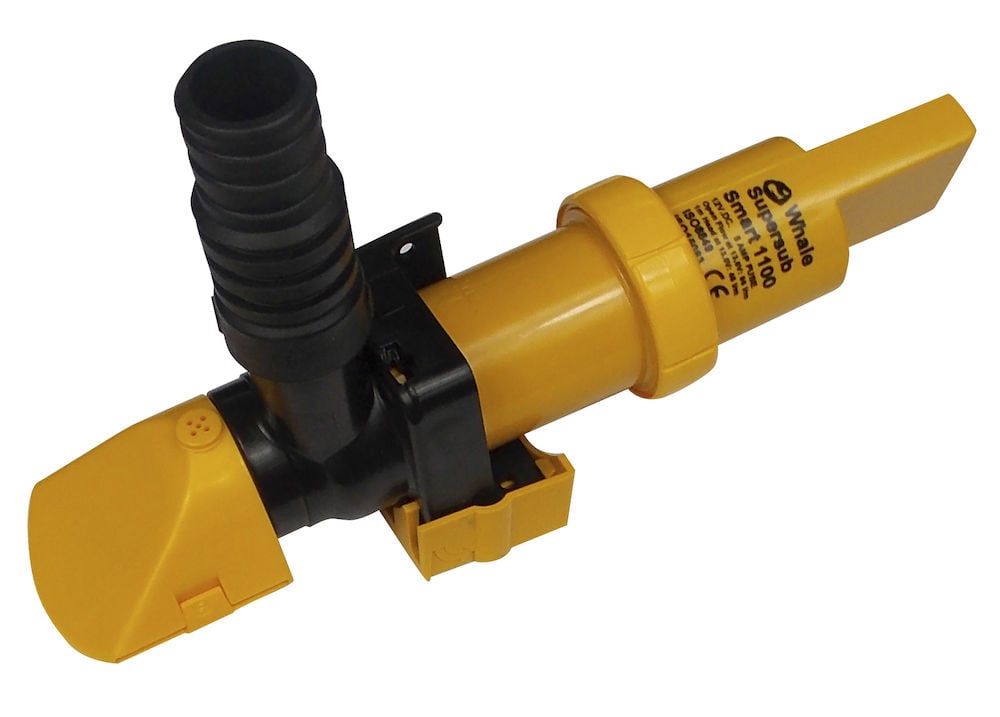
Supersub 1100 - 12 V Automatic Bilge Pump
Ref : SS1212
Choose your option

Whale Bilge IC 24 V Automatic Bilge Pump System
Ref : SI8484
Choose your option

Whale Bilge IC 12V Automatic Bilge System
Ref : SI8284
Choose your option

Side-entry bilge strainer 19 mm
Ref : SB3422
Choose your option

Inline check valve 19/25 mm
Ref : LV1219
Choose your option

Field Switch Level Switch
Ref : BE9003
Choose your option

Mini Puppy 24 V 6 l/min
Ref : J016
Choose your option

Utility Puppy 3000 24 V 44 l/min at 3 m
Ref : J028
Choose your option

Water Puppy 2000 12 V
Ref : J019
Choose your option

Mini Puppy 12 V 6 l/min
Ref : J015
Choose your option

Utility Puppy 2000 12 V 29.5 l/min at 3 m
Ref : J025
Choose your option

Utility Puppy 3000 12 V 44 l/min at 3 m
Ref : J027
Choose your option

Water Puppy 2000 24 V
Ref : J020
Choose your option

Utility Puppy 2000 24 V 29.5 l/min at 3 m
Ref : J026
Choose your option
Learn more
Bilge pump: evacuating water from the boat’s lowest point
An electric bilge pump removes water that collects at the lowest point of the hull. This collection includes 12 V and 24 V Whale and Jabsco pumps, automatic systems, and installation accessories. Manual pumps are in the manual bilge pumps collection. For the full method, read our guide bilge pump: flow rate, installation, and safety.
The families in this collection
- Whale Supersub: Supersub 500 12 V, Supersub Smart 650 automatic 12 V, Supersub 1100 automatic 12 V and 24 V.
- Automatic systems Whale Bilge IC: Bilge IC 12 V and Bilge IC 24 V.
- Jabsco Puppy series, for dewatering and transfer: Mini Puppy 12 V and 24 V, Water Puppy 2000 12 V and 24 V, Utility Puppy 2000 and Utility Puppy 3000, whose flow rate is given at 3 m of head.
- Installation accessories: side-entry strainer 19 mm, inline non-return valve 19/25 mm, Field Switch level switch.
- Other automatic pumps in the catalog: Attwood Sahara MK2 1200 12 V and 24 V.
How to choose: actual flow rate, voltage, automation
- Actual flow rate, not the box rating. Commercial flow rates are measured under manufacturer-defined conditions. On board, the discharge head, hose length and diameter, elbows, valves, and available voltage reduce them. Compare performance curves or tables at the intended head for your boat.
- Voltage. Choose a pump that matches the boat’s system voltage, 12 V or 24 V, and size the cable so it receives its rated voltage when running: voltage drop slows the motor.
- Automatic or manual control. An automatic pump has an integrated sensor or uses a separate float, such as the Field Switch. In either case, the system must remain manually testable; a three-position switch (off, automatic, forced) often provides this.
- Two levels and an alarm. A small pump at the lowest point removes routine water; a second, higher pump takes over in abnormal rises and triggers an alarm on a separate sensor. The number and capacity of pumps depend on the boat and its requirements.
Installation: the details that make the difference
- Place the intake at the true lowest point, both afloat and under way, with the strainer accessible for cleaning.
- Keep the discharge hose at the recommended diameter, short, and free of crushed bends.
- Prevent backflow and siphoning: outlet above the waterline per the manual, vented loop if needed. An inline non-return valve is not always necessary: it adds pressure loss and a risk of blockage.
- Protect the circuit with a fuse or circuit breaker sized per the manual and clearly label the pump on the electrical panel.
Common mistakes
- Choosing based on the rated flow alone, without accounting for head and hose.
- Leaving an automatic pump without an alarm: a continuously running pump can mask a water ingress until batteries are drained.
- Removing the manual pump: it remains usable after battery, wiring, sensor, or motor failure.
Skysat advice
Test the installation with water: pour a measured amount into the bilge, verify automatic activation, time the evacuation, and check the discharge. Whale states in its manuals that a bilge pump may not suffice in the event of a rapid flooding: it handles flowing water and buys time, but does not replace locating the leak.


